
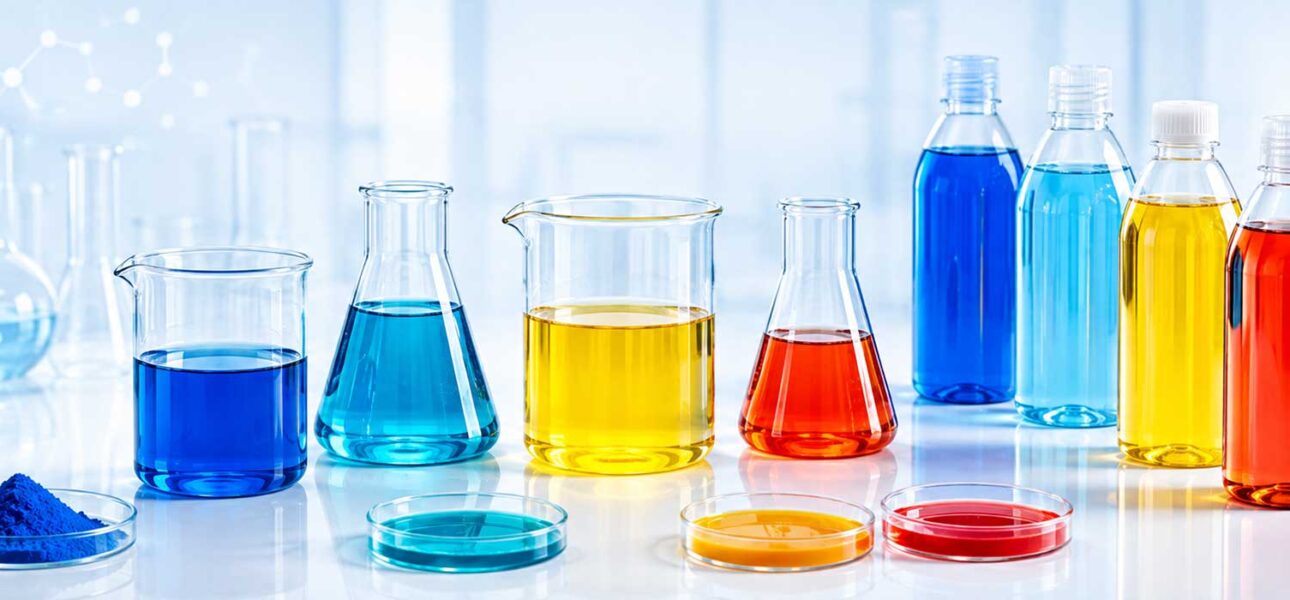
Colors for liquid laundry detergent break down into acid dyes, direct dyes, and pigment dispersions; compared here by solubility, stability, and application fit, so you can weigh your options before you specify a shade.
Formulators typically choose colors for liquid laundry detergent from three synthetic classes: acid dyes, direct dyes, and pigment dispersions — selected for how well they hold up in a surfactant-based, sometimes bleach-containing formula stored for months, occasionally in clear packaging under direct light. Because liquid detergent is water-based, the water-soluble dyes from Advik Colors’ personal and home care color range are the ones actually suited to it — 21 shades across yellow, orange, red, green, and blue/black, with reds like FD&C Red 40, D&C Red 22, and Amaranth among the most frequently specified. See the full list below.
| Color System | Solubility | Typical Use | Light Stability |
|---|---|---|---|
| Acid Dyes | Fully water-soluble | Clear or translucent liquid bases | Moderate to good |
| Direct Dyes | Water-soluble | Cost-sensitive, high-volume formulas | Moderate |
| Pigment Dispersions | Insoluble, dispersed | Opaque liquids, colored beads/pearls | Good to excellent |
What Are Synthetic Colors Used in Liquid Laundry Detergent?

Synthetic colors for liquid laundry detergent are man-made colorants added to give a product its signature look — the deep blue of a classic formula, a bright pink concentrate, or a pastel-tinted gel. Unlike colorants used in food or pharmaceuticals, colors used in liquid laundry detergent are chosen mainly for how well they survive a demanding chemical environment: high surfactant concentration, occasional contact with bleach or enzymes, and months of shelf storage, sometimes in clear bottles under direct light.
Why Detergents Are Colored in the First Place
Color plays a few practical roles beyond shelf appeal. It reinforces brand recognition across a product line, gives consumers a visual cue for correct dosing when the product is diluted in a wash cycle, and can mask a dull or inconsistent tint in the raw surfactant base. A stable, well-matched shade also signals batch-to-batch consistency, which matters more to repeat buyers than most formulators expect — one more reason the choice of colors for liquid laundry detergent deserves as much testing rigor as the surfactant system itself.
Synthetic vs. Natural Colorants
Natural colorants exist, but synthetic dyes and pigments dominate the category for good reason: they’re more consistent from batch to batch, more resistant to the pH and surfactant conditions inside a detergent, and considerably more cost-effective at scale. That consistency is exactly what most formulators are optimizing for when they compare colors for liquid laundry detergent.
Types of Color Systems Used in Liquid Laundry Detergent
There are three main systems formulators draw on when specifying colors for liquid laundry detergent. Each behaves differently once it hits the surfactant base, so the right system depends on the target shade, the packaging, and how long the product needs to hold its color on the shelf.
Acid Dyes — The Default for Clear, Bright Shades
Fully water-soluble · Transparent tint
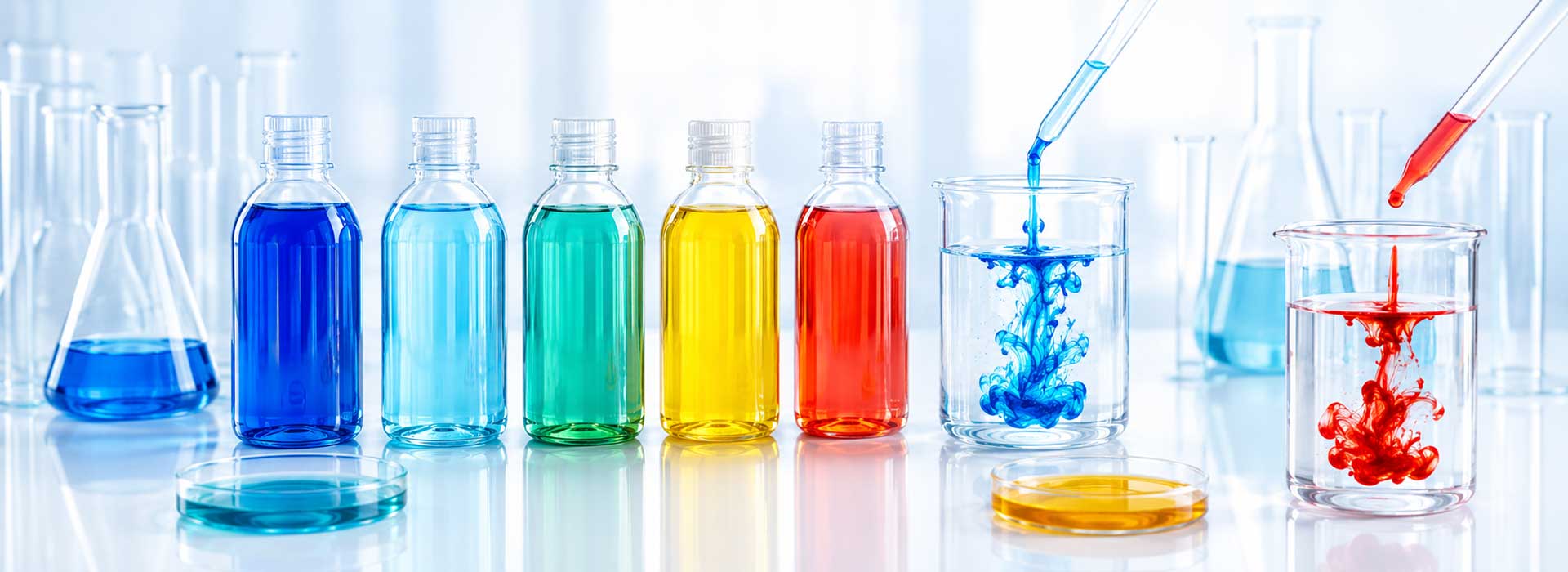
Acid dyes are the most common class of colors for liquid laundry detergent because they dissolve cleanly in the surfactant-rich, mildly alkaline base most liquid formulas use. They deliver bright, transparent shades that suit clear or translucent packaging, though light fastness varies by shade and should be confirmed for any product sold in a clear bottle.
Direct Dyes — Cost-Efficient at Scale
Water-soluble · Budget-sensitive formulas
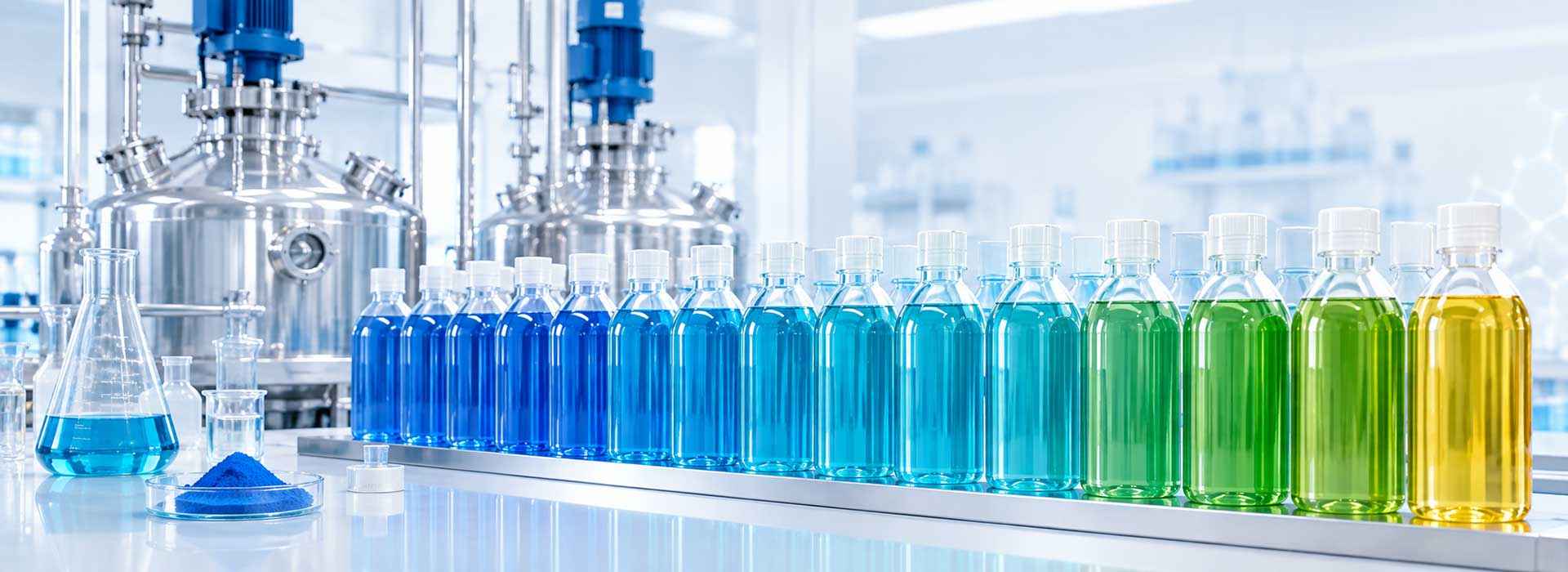
Direct dyes offer a lower-cost route to a similar water-soluble result. They’re a reasonable fit for high-volume, price-sensitive product lines, though they generally trail acid dyes on light and heat stability — worth weighing against your target shelf life.
Pigment Dispersions — For Opacity and Suspended Beads
Insoluble · Dispersed particles
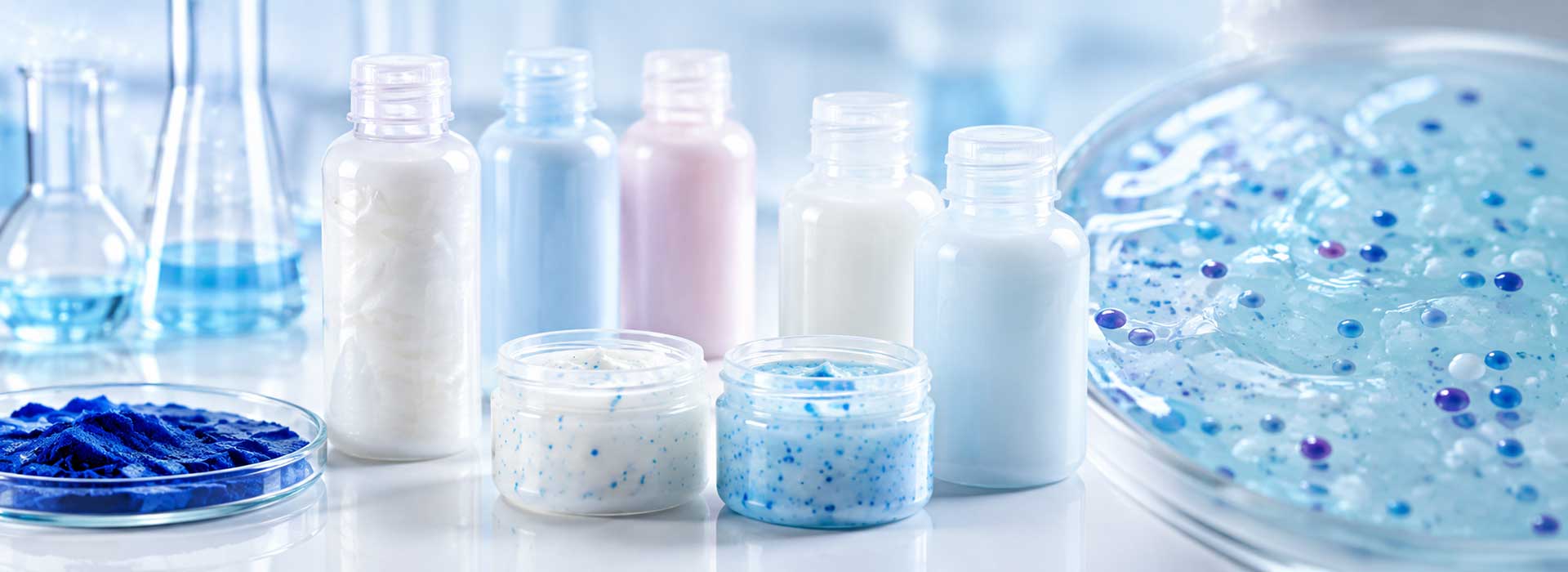
Unlike dyes, pigments don’t dissolve — they’re finely milled and dispersed throughout the formula. That makes them the go-to choice for opaque liquids and for the colored beads or pearls suspended in some detergent formulas, since a stable dispersion resists settling and holds its shade even under repeated shaking.
One clarification worth making here: optical brighteners are a separate additive class entirely. They work by converting UV light into visible blue light to make fabrics look “whiter,” and they are not part of how a formulator specifies colors for liquid laundry detergent — the two are easy to conflate but serve completely different purposes.
Colors Used Mostly in Liquid Laundry Detergent
Advik Colors’ personal and home care color range lists two groups of dyes: water-soluble and oil-soluble. Liquid laundry detergent is an aqueous, surfactant-based formula, so it’s the water-soluble group — not the oil-soluble one — that’s actually suited to it; oil-soluble dyes are formulated for oil- or solvent-based products instead. Below is the complete list of colors for liquid laundry detergent from that water-soluble range, organized by hue, with each shade traceable to its Colour Index (C.I.) number — the international reference database maintained by the Society of Dyers and Colourists.
| Shade | C.I. No. | Color Family |
|---|---|---|
| FD&C Yellow 5 | 19140 | Yellow |
| FD&C Yellow 6 | 15985 | Yellow |
| D&C Yellow 8 | 45350 | Yellow |
| D&C Yellow 10 (Quinoline Yellow WS) | 47005 | Yellow |
| D&C Orange 4 | 15510 | Orange |
| Ponceau 4R | 16255 | Red |
| FD&C Red 4 | 14700 | Red |
| FD&C Red 40 (Allura Red) | 16035 | Red |
| Red 2G | 18050 | Red |
| FD&C Red 3 | 45430 | Red |
| D&C Red 22 (Eosine Y) | 45380 | Red |
| D&C Red 28 | 45410 | Red |
| D&C Red 33 | 17200 | Red |
| Carmoisine | 14720 | Red |
| Amaranth | 16185 | Red |
| D&C Green 5 | 61570 | Green |
| D&C Green 8 | 59040 | Green |
| FD&C Green 3 | 42053 | Green |
| Green S | 44090 | Green |
| FD&C Blue 1 | 42090 | Blue |
| Black PN | 28440 | Black |
Within this water-soluble range, reds dominate the list — a pattern that lines up with how often red and pink shades are specified for liquid laundry detergent in practice. FD&C Red 40, D&C Red 22, and Amaranth are three of the most frequently reached-for shades in that red group, valued respectively for broad regulatory acceptance, a brighter pink-leaning tone, and strong tinting power at low dosage.
21
Water-soluble colors for liquid laundry detergent
5
Color families — yellow, orange, red, green, blue/black
3
Main color systems — acid, direct, pigment
1
C.I. number per shade, always traceable
Application Conditions That Affect Your Choice of Colors for Liquid Laundry Detergent
Picking a shade is the easy part. Whether colors for liquid laundry detergent stay true on the shelf depends on how well they’re matched to the formulation and packaging conditions below.
Formulation
pH Range
Liquid detergents are typically neutral to mildly alkaline. Some dyes shift shade or precipitate outside their tested pH window, so match the colorant to your formula’s actual range, not just its label category.
Formulation
Surfactant Compatibility
Anionic and nonionic surfactant systems interact differently with a given dye or pigment. Test compatibility in your actual base rather than assuming a shade that works in one formula will behave identically in another.
Formulation
Bleach & Enzyme Content
Bleach and certain enzymes can degrade color faster than expected. If your formula includes either, prioritize colorants with documented resistance rather than discovering the issue after launch.
Storage
Temperature & Shelf Life
Heat accelerates most forms of color degradation. Validate stability at the storage and transport temperatures your product will actually see, not just at room temperature in a lab.
Packaging
Light Exposure
Clear bottles expose the formula to continuous UV and visible light, which is the single biggest driver of fading. Opaque or tinted packaging gives you more latitude in colorant choice.
Formulation
Fragrance Interaction
Fragrance oils can occasionally interact with certain dyes over time. Test the final combination together, since a colorant that’s stable on its own isn’t automatically stable once fragrance is added.
Colors for Liquid Laundry Detergent: Stability Factors to Evaluate
Stability is where most mistakes with colors for liquid laundry detergent surface — often months after launch, once a batch has spent real time on a shelf. These are the factors worth testing before you commit to a shade.
- Light fastness — how well the colorant resists fading under UV and visible light, especially critical for clear packaging.
- pH stability — whether the shade holds steady, or drifts and precipitates, across your formulation’s working pH range.
- Fragrance oil compatibility — confirmed by testing the colorant and fragrance together, not in isolation.
- Long-term storage stability — verified under realistic heat and humidity conditions, not just standard lab storage.
Signs Your Color Isn’t Stable
Watch for fading toward a washed-out or muddy version of the original shade, visible bleeding or streaking within the liquid, or fine precipitate settling at the bottom of the bottle. Any of these during accelerated stability testing is a strong signal to revisit the colorant choice before scaling up production.
How to Choose the Right Colors for Your Liquid Laundry Detergent Formulation
With the systems and stability factors above in mind, narrowing down colors for liquid laundry detergent comes down to five practical steps.
- Define your target shade and brand requirements — start with the exact hue and intensity your brand needs, not a general color family, so you can narrow the field of candidate colorants immediately.
- Check regulatory status in your target market — colorant approval varies by region and by application, so confirm the shade you want is cleared for your specific product category and destination market.
- Test compatibility with your base formulation — run the colorant in your actual surfactant, pH, and bleach/enzyme environment, not a generic reference formula, to catch interaction issues early.
- Validate stability under real storage and shipping conditions — test at the heat, humidity, and light exposure your product will actually experience between manufacturing and the end user’s shelf.
- Confirm manufacturer documentation and batch consistency — request a Certificate of Analysis and check that the supplier can reproduce the same shade, batch after batch, at production volume.
Comparing Shades for Your Formulation?
Explore Advik Colors’ technical color guides or speak with our team for application-specific guidance on colors for liquid laundry detergent.
Working With a Colors for Liquid Laundry Detergent Manufacturer
Once you’ve narrowed the shade and system, the manufacturer you source colors for liquid laundry detergent from matters almost as much as the colorant itself.
What to Ask a Supplier
Request a Certificate of Analysis for every batch, not just the first sample, along with documented regulatory status for your target markets and stability data specific to a surfactant-based liquid formula — general dye specification sheets often don’t cover detergent-specific conditions.
Custom Shade Matching vs. Standard Ranges
Standard shades from a supplier’s existing range are faster to source and typically cheaper. Custom shade matching takes longer and usually costs more, but it’s the right call when brand consistency across a product line matters more than speed to market.
Why Technical Support Matters
A manufacturer that can advise on pH range, surfactant compatibility, and expected shelf-life performance for your specific formula saves far more time than one that simply ships a colorant and a data sheet. That kind of support is usually the real difference between suppliers once price and shade options are comparable.
Frequently Asked Questions
What colors are used in liquid laundry detergent?
Most liquid laundry detergents use synthetic acid dyes, direct dyes, or pigment dispersions from the water-soluble category — not oil-soluble dyes, since a liquid detergent base is aqueous. Advik Colors’ personal and home care range lists 21 such water-soluble shades across yellow, orange, red, green, and blue/black, with reds such as FD&C Red 40, D&C Red 22, and Amaranth among the most frequently specified colors for liquid laundry detergent.
Are synthetic colors in laundry detergent safe?
Synthetic colorants used in liquid laundry detergent are formulated and dosed for a non-ingested, external-contact product, and reputable suppliers provide safety data sheets and regulatory documentation for each shade. Regulatory status varies by region and by colorant, so confirm approval status with your supplier for your specific market – the FDA Color Additive Status List is a useful starting reference for US-bound products.
Why does the color in liquid detergent fade over time?
Fading is usually caused by light exposure in clear packaging, pH drift in the formulation, or interaction with bleach or enzyme additives. For colors for liquid laundry detergent specifically, choosing a colorant with proven light fastness and pH stability for your base formula is the most reliable way to prevent it.
Can pigments and dyes be combined in one detergent formulation?
Yes, though it’s less common. Formulators sometimes combine a dye for the liquid phase with a pigment dispersion for colored beads or pearls suspended in the same product, provided both are tested together for compatibility and consistent shade over the product’s shelf life.
Do colorants affect how well a liquid laundry detergent cleans?
At the low dosage levels typically used, colorants are not expected to interfere with surfactant performance. The main risk runs the other way — the surfactant system, pH, and bleach content of the detergent can affect how stable the color stays, which is why compatibility testing during formulation matters.
Next Step
Explore Colors for Your Formulation.
Advik Colors supplies acid dyes, direct dyes, and pigment dispersions for liquid laundry detergent, backed by stability data and batch documentation your formulation team can rely on.