
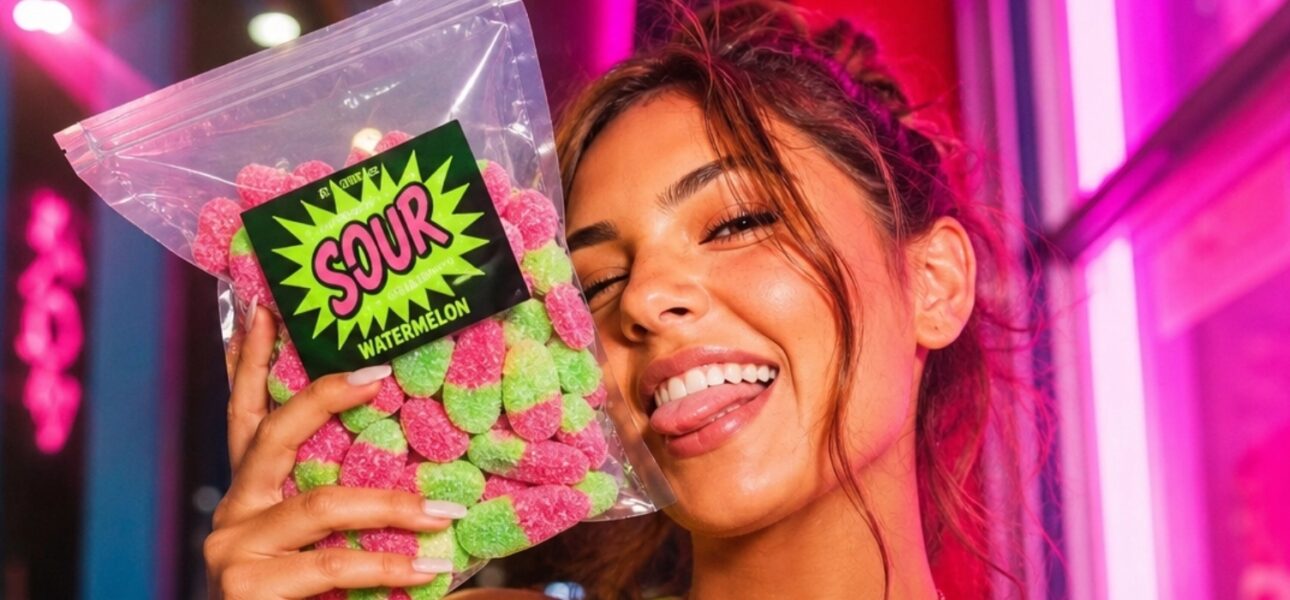
The top food color trends in confectionery for 2026 are: (1) Bold maximalist brights — hyper-saturated neon-adjacent palettes driven by Gen Z and social media culture; (2) Clean label natural colors — plant-derived pigments meeting consumer “free-from artificial” demand; (3) Color-shifting iridescence — pearlescent and multichromatic effects for premium positioning; (4) Nostalgic pastel revival — soft Y2K-era shades driven by retro aesthetics; (5) Functional coloring ingredients — pigments that also carry a health claim; (6) Regional color personalization — market-specific shade preferences in Asia, MENA, and the Americas; and (7) Sustainability-linked coloring — reduced synthetic load and waste-stream pigment sourcing.
Color is no longer merely a finishing touch in confectionery manufacturing — it is a primary purchase driver. In an era where 70% of candy purchase decisions are made at the point of display, the shade of a gummy bear, the gloss of a chocolate shell, or the opacity of a hard candy is as commercially powerful as flavor. The 2026 confectionery market is shaped by seven distinct color forces that every product developer and procurement team needs to understand.
KEY 2026 INSIGHT
“70% of candy purchases decided at point of display.” Color is a primary commercial signal — not a secondary specification.
01
of 07
Palette Trend · High Growth
Bold Maximalist Brights
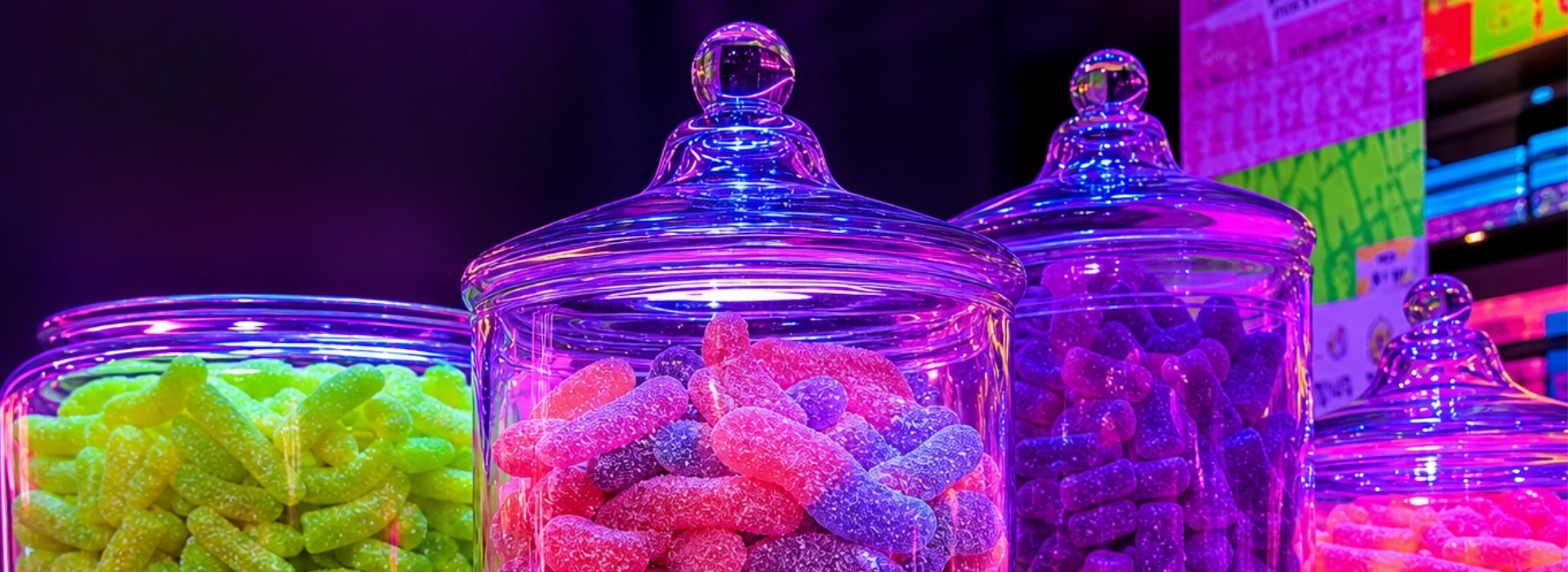
The single largest color shift in confectionery for 2026 is the acceleration of hyper-saturated, high-chroma palettes. Driven primarily by Gen Z consumer aesthetics and the viral mechanics of social media candy content, brands are moving away from safe, muted color ranges toward vivid electric shades that photograph dramatically and generate organic social sharing.
The iconic “neon gummy” aesthetic — electric pinks, acid greens, hot corals, and ultra-violet purples — has migrated from novelty format into mainstream multi-packs. Confectionery brands launching in 2026 are deliberately engineering their color palettes for social media shareability, a dynamic that did not exist in mainstream product development five years ago.
Key Shade Territory
Hot Pink
Electric Coral
Ultra Violet
Neon Teal
Acid Yellow
Color Recommendations for Bold Brights
Achieving true maximalist brightness in gummies and hard candy requires high-purity synthetic dyes at the upper end of their dosage range, used alone or in precisely controlled blends. Recommended colors:
Allura Red AC (E129) Ponceau 4R (E124) Tartrazine (E102) Brilliant Blue FCF (E133) Brilliant Blue + Carmoisine blend
Growth Signal
Very High
Key Format
Gummies, Hard Candy
Color System
Synthetic
Lead Market
US, UK, ANZ
02
of 07
Clean Label · Sustained Growth
Natural & Plant-Derived Colors
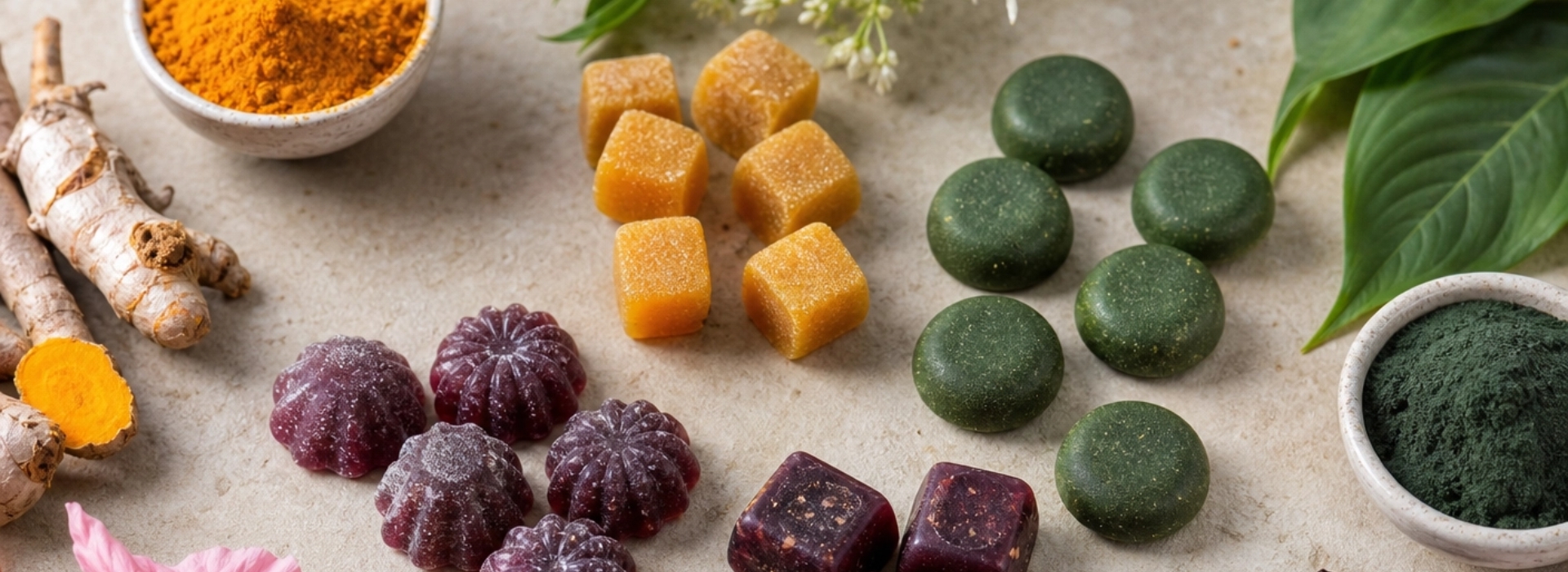
The clean label movement entered mainstream confectionery years ago — but 2026 marks a significant acceleration driven by three converging forces: retailer listing requirements in key EU and US markets, the functional gummy boom (vitamins, CBD, collagen), and a generational shift in consumer ingredient literacy among Millennial and Gen Z buyers who read labels before purchasing.
The market for natural food colors in confectionery is projected to grow at approximately 7–9% CAGR through 2027 (Source: mintel.com & euromonitor.com), with gummies and functional candies as the primary growth categories. Front-of-pack claims like “colored with fruit and vegetable juice” or “no artificial colors” are now established purchase triggers, particularly in pharmacy-adjacent retail, health food stores, and premium online channels.
Natural Colors Gaining Traction in Confectionery
Black Carrot
Turmeric
Hibiscus
Spirulina
Paprika
The Formulation Challenge
Natural colors in gummies face persistent technical hurdles — heat degradation above 70°C, hue shift at low pH (3–4), and batch-to-batch variation. The 2026 market response has been encapsulation technology, which wraps sensitive pigments (particularly spirulina and anthocyanins) in protective matrices that release color after heat processing. This has made previously unusable natural shades viable for gummy production, albeit at significantly higher cost than synthetic alternatives.
For manufacturers who require both clean-label positioning and technical reliability, a hybrid approach — natural colors for dominant shades, synthetic for secondary or decorative elements — is an emerging 2026 formulation strategy.
Growth Signal
High
Key Format
Functional Gummies
Color System
Natural / Hybrid
Lead Market
EU, North America
03
of 07
Innovation Trend · Emerging
Color-Shifting & Iridescent Effects
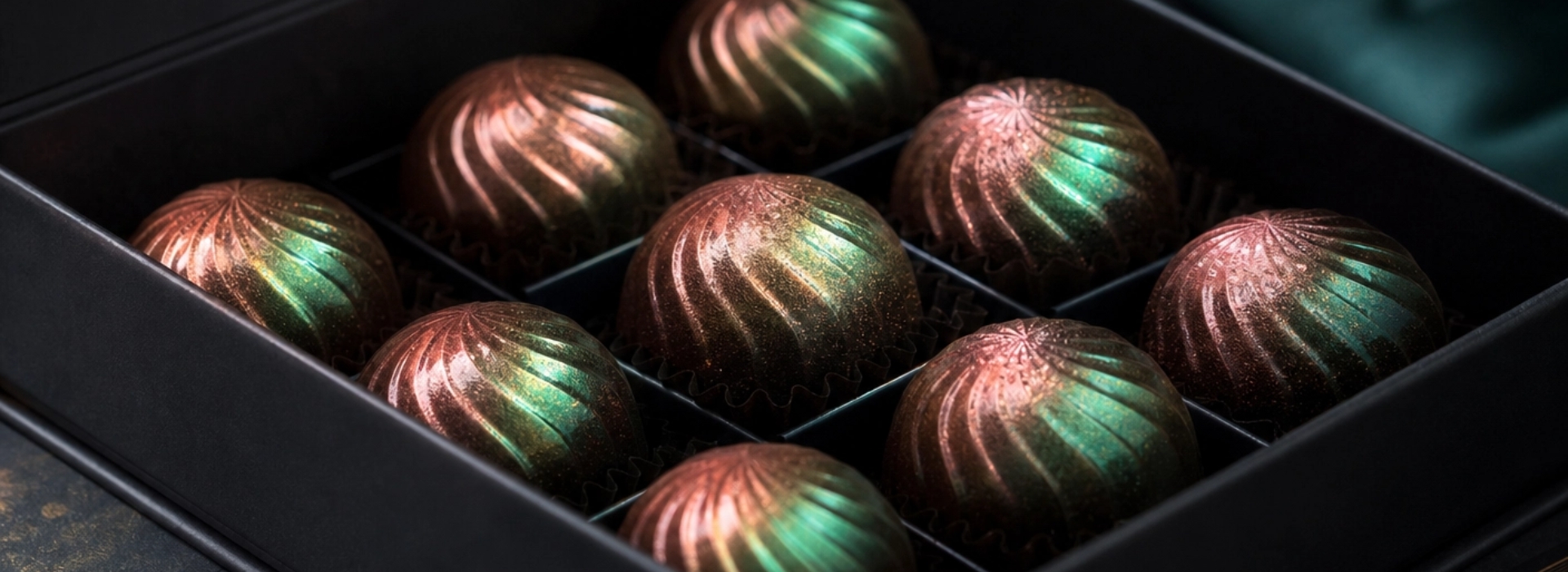
One of the most distinctly 2026 confectionery color phenomena is the rapid mainstream uptake of multichromatic, color-shifting, and iridescent effects. What began as a premium novelty format in artisan chocolate and high-end gifting confectionery has migrated into gummies, hard candies, and seasonal items driven by the same social sharing mechanics behind maximalist brights.
These effects are achieved through mica-based pearlescent pigments and interference colorants — food-grade metallic and iridescent pigments approved for confectionery surfaces. When combined with a vibrant synthetic dye base coat, they produce a color-shift effect that changes from pink to gold to green depending on viewing angle. This “ASMR candy” aesthetic is disproportionately successful on video-first social platforms.
Technical Implementation
Color-shift gummies typically use a two-stage coloring system: a water-soluble base dye (e.g. Carmoisine for pink, Brilliant Blue for blue) provides the body color throughout the gummy mass, while a surface-applied pearlescent or luster dust creates the iridescent overlay. The surface layer is applied during the oiling/polishing stage post-demoulding.
For chocolate and compound coating applications, interference pigments are dispersed directly into the fat phase of the coating, producing holographic shell effects without additional surface treatment.
Holographic
Aurora Gold
Neon Shift
Pearl Rose
Growth Signal
Emerging Fast
Key Format
Gummies, Chocolate
Color System
Synthetic + Pearlescent
Lead Market
US, South Korea, UK
04
of 07
Nostalgia Trend · Growing
Nostalgic Pastel Revival
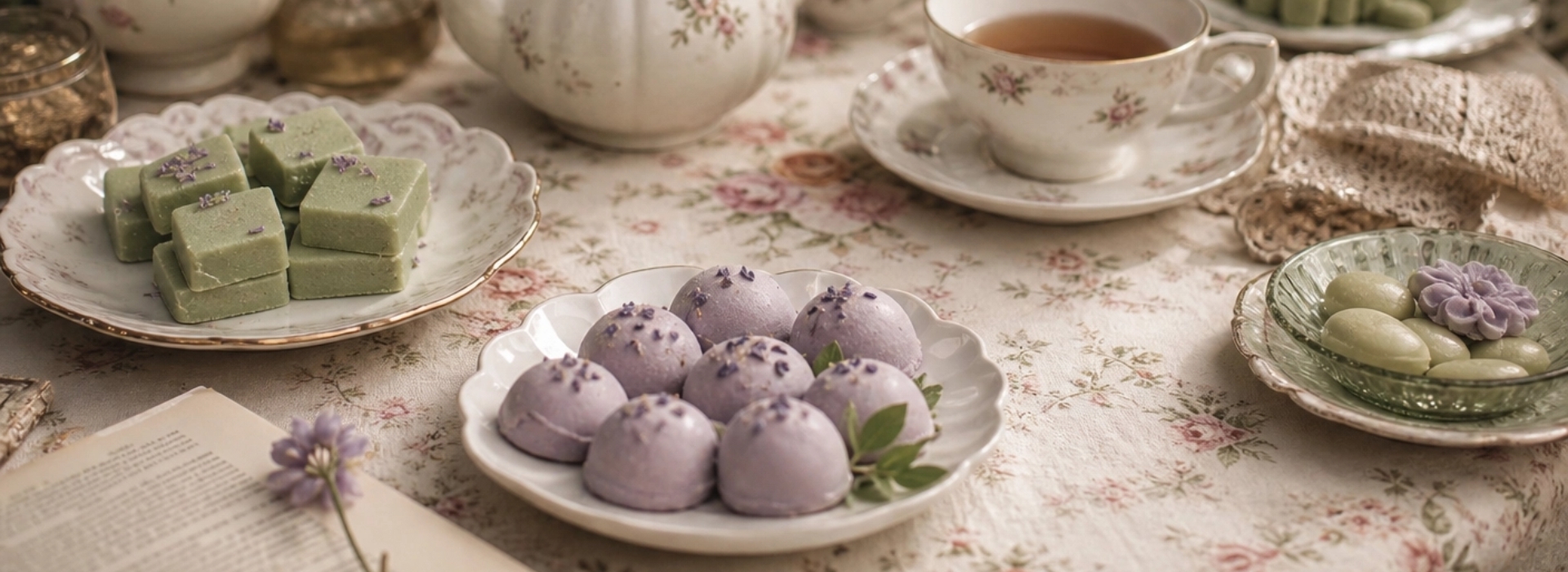
Running in parallel with maximalist brights — and not contradicting them — is a significant counter-trend toward soft, dusty, and muted pastel shades. Driven by Y2K nostalgia, cottagecore aesthetics, and vintage candy rebrand projects, pastels are commanding shelf space in premium gifting confectionery, seasonal ranges, and “indie” candy formats that position against mass-market brights.
2026’s pastel palette is characterized by desaturation and warmth — think sage green, dusty lavender, butter yellow, soft peach, and powdered rose rather than the stark white-washed pastels of previous decades. These shades communicate approachability, nostalgia, and artisanal quality simultaneously.
Key 2026 Pastel Shades for Confectionery
Powder Rose
Butter Yellow
Sage Green
Dusty Lavender
Soft Peach
Achieving Pastels with Synthetic Dyes
Pastel shades are produced by using synthetic dyes at very low dosage levels — typically 5–15% of the standard application rate. The key is using high-purity, high-tint-strength dyes that maintain hue fidelity even at minimal concentrations. A low-quality dye at pastel dosage levels loses chromatic identity and produces a muddy, undefined shade. Tartrazine for butter yellows, Carmoisine at minimal dose for powder rose, and Brilliant Blue + Tartrazine at ultra-low dose for sage green are the recommended technical approaches.
Growth Signal
Growing
Key Format
Gift Confectionery
Color System
Synthetic (low dose)
Lead Market
UK, Japan, Europe
05
of 07
Functional Trend · High Growth
Functional Coloring Ingredients
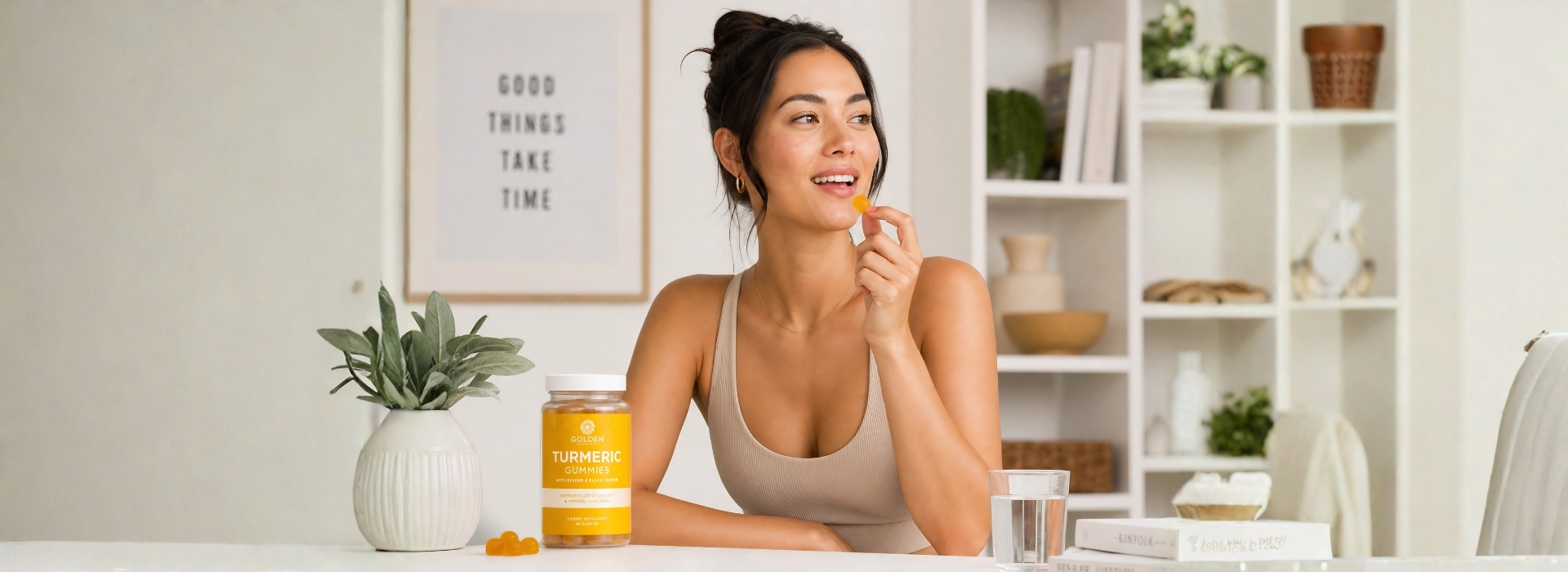
The fastest-growing intersection in confectionery is the convergence of color and function. Functional coloring ingredients are pigments that simultaneously color the product AND carry a recognized health or wellness claim — creating a dual-purpose ingredient that reduces label count, supports the clean label narrative, and adds a marketable benefit story to the product.
The functional gummy market — including vitamins, minerals, collagen, CBD, adaptogens, and probiotics — reached an estimated $7+ billion globally in 2025 and is projected to continue double-digit growth through 2027. Color is inseparable from the positioning of these products: a turmeric-golden gummy communicates its anti-inflammatory positioning visually before the consumer reads the label.
Leading Functional Coloring Ingredients
| Ingredient | Color Delivered | Functional Claim | Confectionery Use |
|---|---|---|---|
| Curcumin (Turmeric) | Yellow–Golden | Anti-inflammatory (EU-reviewed) | Wellness gummies, lozenges |
| Spirulina Phycocyanin | Blue–Green | Antioxidant, protein source | Health gummies (encapsulated) |
| Anthocyanins (Black Carrot) | Red–Purple | Antioxidant, eye health | Functional candy, gummies |
| Elderberry Extract | Deep Purple–Red | Immune support (popular claim) | Immune gummies, lozenges |
| Beetroot (Betanin) | Red–Pink | Nitrate, sports nutrition | Sports gummies (if cold-process) |
| Hibiscus Extract | Pink–Red | Blood pressure (emerging evidence) | Wellness candy, gummies |
| Saffron | Deep Yellow | Mood support (emerging evidence) | Premium functional candy |
| Chlorophyllin | Green | Detox, antioxidant | Detox gummies (stabilized) |
Growth Signal
Very High
Key Format
Supplement Gummies
Color System
Natural Functional
Lead Market
US, Germany, India
06
of 07
Market Intelligence · Ongoing
Regional Color Personalization

As confectionery brands expand globally, the homogenization of color palettes is giving way to deliberate regional shade personalization. 2026 sees manufacturers increasingly tailoring their candy color profiles to regional cultural preferences, flavor associations, and regulatory environments — moving away from single global SKUs toward market-specific color variants.
| Region | Dominant Shade Preferences | Cultural Driver | Key Colors |
|---|---|---|---|
| 🟠 South & Southeast Asia | Warm oranges, deep reds, saffron yellows | Festive color associations, traditional sweet palettes | Sunset Yellow, Ponceau 4R, Tartrazine |
| 🟢 Middle East & North Africa | Rich jewel tones — emerald, ruby, gold | Premium positioning, luxury confectionery culture | Green S, Carmoisine, Quinoline Yellow |
| 🔵 East Asia (Japan, Korea, China) | Soft pastels, translucent shades, matcha greens | Kawaii aesthetics, clean minimal visual culture | Tartrazine (low dose), Brilliant Blue blend |
| 🔴 North America | Bold brights, neon, maximalist multi-color | Gen Z aesthetics, social media candy culture | Allura Red, Brilliant Blue, blended primaries |
| 🟤 Western Europe | Natural tones, muted palettes, botanical shades | Clean label regulation, natural preference | Anthocyanins, Turmeric, Paprika (naturals preferred) |
| 🟡 Latin America | Warm tropical shades — mango, tamarind, hibiscus | Flavor-color alignment, traditional confectionery | Sunset Yellow, Tartrazine, Carmoisine |
Growth Signal
Steady
Key Format
All Formats
Color System
Market-Specific
Key Action
Color Localization
07
of 07
Sustainability Trend · Early Stage
Sustainability-Linked Coloring
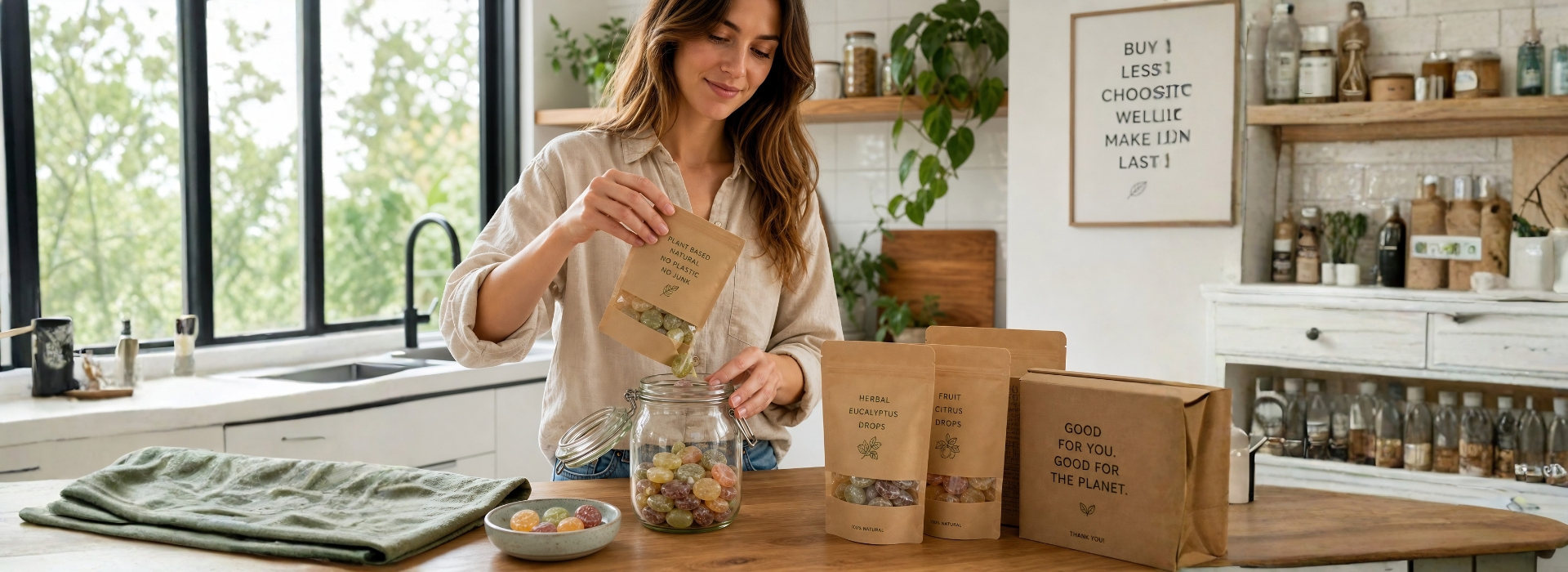
The final emerging force in 2026 confectionery coloring is sustainability-linked sourcing and formulation. As environmental, social, and governance (ESG) commitments cascade from brand to supplier requirements, food color sourcing is entering the sustainability conversation for the first time in a structured, measurable way.
Three distinct sustainability themes are emerging: (1) Waste-stream pigment sourcing — extracting natural pigments from agricultural by-products (grape pomace, tomato skins, carrot tops); (2) Reduced synthetic load — using high-tint-strength dyes at minimal effective dosage to reduce total chemical volume per tonne; and (3) Supplier transparency — full supply chain traceability, Certificate of Analysis documentation, and country-of-origin verification for every color lot.
Why Synthetic Colors Can Be the Sustainable Choice
A counterintuitive insight gaining traction in 2026: high-purity synthetic food colors have a lower per-unit environmental footprint than many natural alternatives. Achieving a given shade intensity in a gummy requires 0.01–0.05% w/w of a synthetic dye vs. 0.5–2.0% w/w of a natural extract. The natural extract requires agricultural land, water, energy-intensive extraction, and often refrigerated logistics — all of which carry their own environmental costs. When total lifecycle impacts are measured per gram of colored finished product, synthetic dyes often outperform natural extracts on carbon and water metrics.
⚑ Industry Expert Perspective
The “natural = sustainable” equation is an oversimplification that the food color industry is beginning to interrogate in 2026. Total lifecycle analysis — accounting for land use, water consumption, extraction energy, transport refrigeration, and dosage rates — frequently shows that precision-manufactured synthetic food colors carry a lower per-unit-of-color environmental cost than bulk natural extracts. Manufacturers making sustainability claims need rigorous data to support them.
Growth Signal
Early & Rising
Key Driver
ESG / Retailer Req.
Color System
Both (with data)
Key Action
Supply Traceability
2026 Trend Summary for Confectionery Manufacturers
| # | Trend | Momentum | Color System | Primary Format | Key Markets |
|---|---|---|---|---|---|
| 01 | Bold Maximalist Brights | 🔥 Very High | Synthetic | Gummies, Hard Candy | US, UK, ANZ |
| 02 | Clean Label Natural Colors | 📈 High | Natural / Hybrid | Functional Gummies | EU, North America |
| 03 | Color-Shift & Iridescence | 🚀 Emerging Fast | Synthetic + Pearlescent | Gummies, Chocolate | US, South Korea, UK |
| 04 | Nostalgic Pastel Revival | 📊 Growing | Synthetic (low dose) | Gift Confectionery | UK, Japan, Europe |
| 05 | Functional Coloring Ingredients | 🔥 Very High | Natural Functional | Supplement Gummies | US, Germany, India |
| 06 | Regional Color Personalization | 📊 Steady | Market-Specific | All Formats | Global — Localized |
| 07 | Sustainability-Linked Coloring | 🌱 Early & Rising | Both (LCA-validated) | All Premium Formats | EU, UK, Scandinavia |
Synthetic Color Recommendations Mapped to 2026 Trends
For confectionery manufacturers acting on these trends, the following Advik Colors synthetic food colors are the primary technical tools:
| Color | E-Number | Hue | Relevant 2026 Trends | Key Application |
|---|---|---|---|---|
| Tartrazine | E102 | Lemon–Golden Yellow | Bold Brights (high dose) · Pastels (low dose) · Regional (Asia, LATAM) | confectionery like Gummies, hard candy, pastels, blending base |
| Sunset Yellow FCF | E110 | Orange-Yellow | Bold Brights · Functional adjacency · LATAM | Tropical gummies, orange hard candy |
| Allura Red AC | E129 | Red | Bold Brights · Color-shift base coat · North America | Red velvet gummies, vibrant red candy |
| Carmoisine | E122 | Deep Red–Pink | Bold Brights · Pastel Rose (low dose) · MENA | Raspberry gummies, rose-flavored confectionery |
| Ponceau 4R | E124 | Strawberry Red | Bold Brights · South Asia color profile | Strawberry gummies, vibrant fruit candy |
| Brilliant Blue FCF | E133 | Royal Blue | Bold Brights · Color-shift · Pastels (blended) | Blue raspberry, holographic gummies, green blends |
| Indigo Carmine | E132 | Deep Blue | Regional (Japan deep indigo preference) | Hard candy, surface-applied decorations |
| Green S | E142 | Green | MENA emerald preference · Botanical aesthetics | Mint, pistachio, matcha-adjacent candy |
| Brown HT | E155 | Chocolate Brown | Regional · Cola and caramel formats | Cola gummies, caramel toffees |
Frequently Asked Questions
What are the top food color trends in confectionery for 2026?
The seven top food color trends in confectionery for 2026 are: (1) Bold maximalist brights — hyper-saturated palettes for social media appeal; (2) Clean label natural colors — plant-derived pigments for “free from artificial colors” positioning; (3) Color-shifting iridescent effects — pearlescent and multichromatic candy; (4) Nostalgic pastel revival — soft Y2K-era shades; (5) Functional coloring ingredients — pigments with health claims (turmeric, spirulina, elderberry); (6) Regional color personalization — culturally relevant shade profiles by market; and (7) Sustainability-linked coloring — reduced synthetic load and supply chain traceability.
What candy colors are trending in 2026?
Trending candy colors in 2026 include electric coral and hot pink (maximalist brights), holographic rainbow (iridescent trend), soft butter yellow and sage green (nostalgic pastel revival), deep berry purple (functional color), and botanical amber-gold (clean label natural tone). Regional variations add warm saffron-yellows for South Asia, pastel translucent shades for East Asia, and jewel-tone emeralds and rubies for MENA markets.
Are natural food colors growing in confectionery manufacturing?
Yes — natural food colors in confectionery are growing at approximately 7–9% CAGR, driven by retailer listing requirements, the functional gummy boom, and consumer demand for clean label ingredients. However, synthetic colors remain dominant in industrial-scale confectionery due to superior heat stability, pH resistance, shade consistency, and cost efficiency. The practical 2026 approach for many manufacturers is a hybrid system — natural colors for main body color where clean-label claims are needed, synthetic colors for secondary or surface applications.
What synthetic food colors should I use for 2026 candy trends?
For bold maximalist brights: Allura Red AC (E129), Brilliant Blue FCF (E133), and Tartrazine (E102) at full dosage. For nostalgic pastels: the same colors at 5–15% of standard dosage. For color-shift iridescent effects: a vibrant synthetic dye base (Carmoisine, Brilliant Blue) with a pearlescent surface coating. For regional personalization: Ponceau 4R for South Asia, Sunset Yellow for LATAM tropical shades, and low-dose Tartrazine blends for East Asian pastel preferences. The full Advik Colors synthetic range covers all these requirements.
Act on 2026’s Color Trends
Get samples, technical specifications, and B2B pricing for the synthetic food colors powering confectionery’s biggest 2026 trends.