
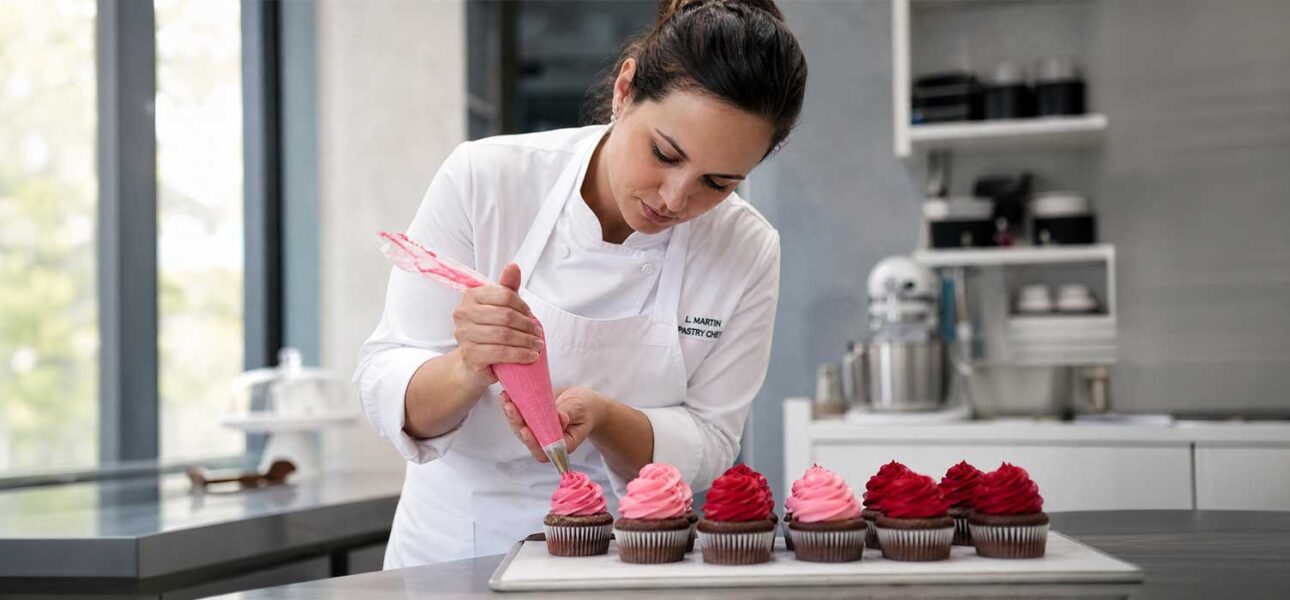
Heat stability, oil vs water systems, shade retention & synthetic color recommendations for professional bakers
★ Quick Answer — Featured Snippet
The best food colors for bakery are heat-stable synthetic dyes — principally Tartrazine (E102), Sunset Yellow FCF (E110), Allura Red AC (E129), Carmoisine (E122), and Brilliant Blue FCF (E133). These withstand baking temperatures of 160–220°C, disperse evenly in water-based batters, and deliver consistent shade batch after batch. For fat-based systems like buttercream or chocolate coatings, oil-soluble formats of the same dyes are required. All are available in food-grade, high-purity form from Advik Colors.
Why Food Colors for Bakery Are Different from Other Applications
Bakery is one of the most demanding environments for food coloring. Unlike beverages or dairy products, bakery applications expose colors to intense, sustained heat — oven temperatures regularly exceed 180°C for 15–45 minutes. This eliminates many natural and unstable synthetic dyes that perform well at room temperature.
Beyond heat, bakery color formulators face three additional challenges:
- pH variation — batter systems can range from pH 4.5 (acidic fruit cakes) to pH 8.5 (baking-soda leavened products), causing hue shifts in pH-sensitive dyes.
- Fat vs water matrix — cake batters and bread doughs are water-continuous, while buttercreams and compound coatings are fat-continuous, requiring different solubility profiles.
- Oxidation & light exposure — pre-packed bakery goods sitting under retail lighting for days can bleach poorly chosen colors.
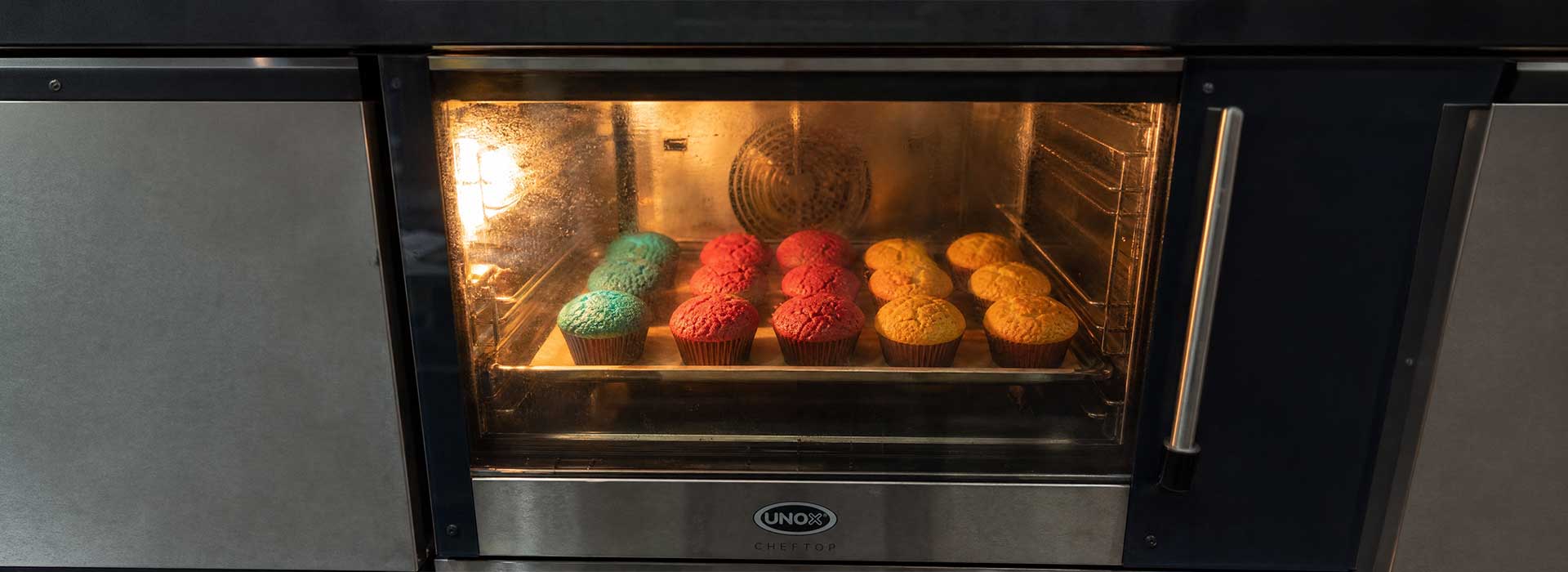
220°C
Max Baking Temp Synthetic Dyes Survive
±0.03%
Typical Dosage Rate in Cake Batter
14+
Approved Synthetic Colors for Bakery
98%
Shade Retention of Top-Grade Dyes at 180°C
Heat Stability: The #1 Factor for Baking Colors
Heat stability refers to a color’s ability to retain its original hue, saturation, and intensity after exposure to baking temperatures. A color that fades, browns, or shifts hue during baking creates inconsistent product appearance and consumer rejection.
How Heat Degrades Color
At temperatures above 100°C, dye molecules can undergo thermal degradation — breaking of chromophore bonds that results in browning or complete decolorization. Poorly purified synthetic colors with high residual impurities degrade faster because impurities act as initiation sites for thermal decomposition.
High-purity synthetic food colors for bakery from regulated manufacturers maintain structural integrity well above baking thresholds because their chromophore systems are thermally robust by design.
Heat Stability Ratings of Common Bakery Colors
| Color (E-Number) | Hue | Stability at 180°C | Stability at 200°C | Best For |
|---|---|---|---|---|
| Tartrazine (E102) | Yellow | EXCELLENT | EXCELLENT | Cakes, cookies, sponges |
| Sunset Yellow FCF (E110) | Orange-Yellow | EXCELLENT | GOOD | Muffins, pastries, premixes |
| Allura Red AC (E129) | Red | EXCELLENT | EXCELLENT | Red velvet, fruit cakes |
| Carmoisine (E122) | Deep Red/Pink | GOOD | MODERATE | Icing, fillings, creams |
| Ponceau 4R (E124) | Strawberry Red | EXCELLENT | GOOD | Toppings, glazes |
| Brilliant Blue FCF (E133) | Royal Blue | GOOD | MODERATE | Frosting, decoration |
| Indigo Carmine (E132) | Deep Blue | MODERATE | MODERATE | Surface decoration, low-heat |
| Green S (E142) | Green | GOOD | MODERATE | Pistachio, mint flavors |
| Erythrosine (E127) | Cherry Pink | MODERATE | MODERATE | Fillings, sugar coatings |
| Brown HT (E155) | Brown | EXCELLENT | EXCELLENT | Chocolate sponge, bread |
Oil-Soluble vs Water-Soluble Food Colors for Bakery
Choosing the wrong solubility system is the most common cause of color streaking, spotting, and uneven shade in bakery products. Here is a clear breakdown for bakery manufacturers:
| Property | Water-Soluble Food Colors | Oil-Soluble Food Colors |
|---|---|---|
| Compatible Matrix | Batters, doughs, syrups, icings, frostings | Buttercream, chocolate, compound coatings |
| Dispersion Method | Dissolve in water, add to wet ingredients | Mix directly into melted fat/oil phase |
| Typical Forms | Powder, liquid, granule | Powder (oil-dispersible), paste |
| Common Products | Cakes, muffins, bread, sugar paste, fondant | Chocolate decor, fat-based cream fillings |
| Risk if Wrong System | Streaking in oil-heavy products | Blobbing, bloom, uneven shade |
⚠ Formulator Note
Most standard synthetic food colors are water-soluble. For oil-based systems, request the oil-dispersible grade specifically — do not attempt to dissolve a water-soluble color in fat. It will not disperse uniformly and will cause visible streaking and phase separation in your finished product.
Shade Retention: Keeping Color Consistent from Batch to Batch
In commercial bakery production, batch-to-batch color consistency is as important as initial appearance. Consumers and retail buyers reject products where shade drifts between production runs. Shade retention depends on four factors:
1. Dye Purity
High-purity dyes (typically ≥90% pure dye content) produce stronger, more predictable tint strength. Lower-purity dyes require higher dosages to achieve the same shade, and their impurity profiles vary, causing batch-to-batch drift. Always source colors with a Certificate of Analysis (CoA) specifying dye content percentage.
2. pH Management
Several synthetic azo dyes shift hue in strongly acidic or alkaline environments. Tartrazine, for example, may shift slightly toward greenish-yellow above pH 8. For baking-soda-leavened products (high pH), cross-test your chosen color in a representative batter before scaling.
3. Antioxidant & Reducing Agent Exposure
Common bakery ingredients like ascorbic acid (vitamin C), sodium bisulphite (used in some premixes), and reducing sugars can bleach certain azo dyes. Ponceau 4R and Carmoisine are most susceptible. Reformulate or select more stable alternatives (Allura Red AC) when these ingredients are present.
4. Storage Conditions Before Use
Store synthetic food color powders in sealed, airtight containers away from direct light, moisture, and heat. Exposure to humidity causes powder caking and reduces dispersibility; UV light degrades certain dye chromophores even before the color enters the batter.
Recommended Synthetic Food Colors for Bakery — By Application
Based on heat stability data, solubility, and commercial performance across bakery segments, the following synthetic food colors for bakery are the recommended choices for bakery manufacturers:
E102 · C.I. 19140
The workhorse yellow for bakery. Outstanding heat stability, high tint strength, clean lemon-to-golden shade. Ideal for sponge cakes, vanilla muffins, custard tarts, and bread premixes.
E110 · C.I. 15985
Warm orange-yellow with high tint strength. Blends with Tartrazine for deeper amber tones. Excellent in muffins, pastries, orange-flavored cakes and biscuits.
E129 · C.I. 16035
The most heat-stable red for bakery. Preferred for red velvet cakes, strawberry muffins, cherry toppings. Resistant to reduction, making it reliable in complex formulations.
E122 · C.I. 14720
Deep raspberry-red shade with good solubility. Best used in icings, fillings, and sugar decorations where baking temperature exposure is lower.
E124 · C.I. 16255
Bright strawberry-red with excellent clarity in water-based systems. Popular for fruit glazes, jam toppings, and strawberry-themed pastries and tarts.
E133 · C.I. 42090
The cleanest blue available for food use. Works well in frostings, fondant, and decorative icings. Often blended with Tartrazine to produce leaf green shades.
E123 · C.I. 16185
Deep wine-red to purple-red shade. Often used in blends for achieving plum and burgundy tones in specialty cakes and dessert fillings.
E155 · C.I. 20285
Chocolate brown with high heat stability — ideal for chocolate-flavored cakes, brownies, and whole-wheat bread premixes where a consistent brown hue is required.
Full Synthetic Color Range for Bakery
Advik Colors supplies the following complete range of suitable synthetic food colors for bakery and associated applications. All are available in powder, liquid, and granular formats for flexible integration into your production line:
| Color Name | E-Number | C.I. Number | Shade | Bakery Use |
|---|---|---|---|---|
| Tartrazine | E102 | 19140 | Yellow | Cakes, muffins, sponges, premixes |
| Quinoline Yellow WS | E104 | 47005 | Dull Yellow-Green | Blending, lemon shades |
| Sunset Yellow FCF | E110 | 15985 | Orange-Yellow | Pastries, orange cakes |
| Amaranth | E123 | 16185 | Wine Red | Specialty cakes, fillings |
| Ponceau 4R | E124 | 16255 | Strawberry Red | Glazes, fruit toppings |
| Erythrosine | E127 | 45430 | Cherry Pink | Sugar coatings, confectionery |
| Allura Red AC | E129 | 16035 | Red | Red velvet, strawberry muffins |
| Patent Blue V | E131 | 42051 | Bright Blue | Decorative icings |
| Indigo Carmine | E132 | 73015 | Deep Blue | Surface decoration |
| Brilliant Blue FCF | E133 | 42090 | Royal Blue | Frosting, fondant, blending |
| Green S | E142 | 44090 | Green | Pistachio, mint, kiwi flavors |
| Carmoisine | E122 | 14720 | Deep Red/Pink | Fillings, icings, toppings |
| Brown HT | E155 | 20285 | Chocolate Brown | Chocolate cakes, brownies |
Dosing & Application Tips for Bakery Manufacturers
Correct dosing is critical. Too little produces a washed-out product; too much wastes cost and risks regulatory non-compliance. Follow these professional guidelines:
- Standard dosage range in cake batter: 0.005% to 0.05% w/w of the total batch weight. Begin at the lower end and adjust.
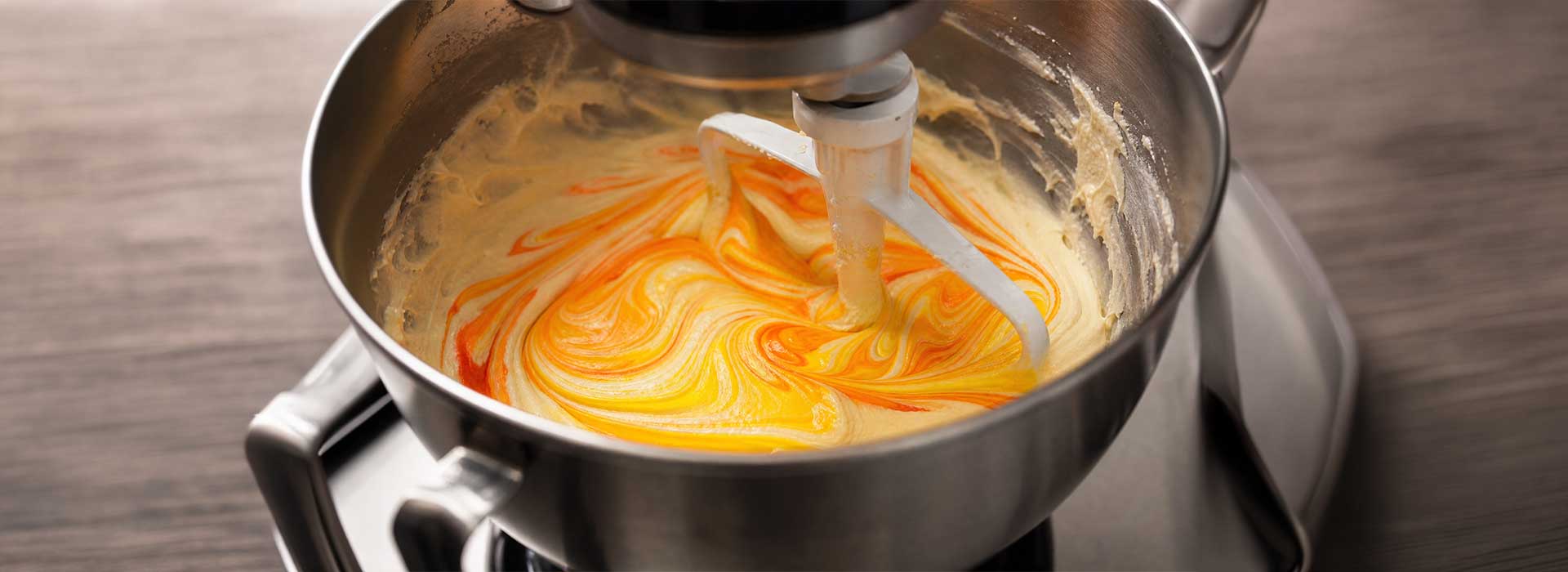
- Pre-dissolve powder colors in a small quantity of water (10–20x weight) before adding to batter. This ensures full dispersion and eliminates undissolved specks.
- Add at the creaming stage for fat-containing batters — incorporation into butter/sugar before flour minimizes uneven distribution.
- For bread premixes, blend color powder with dry ingredients first to achieve uniform pre-distribution before water addition.
- For icings and frostings, add color to the liquid component before incorporating the fat phase to prevent streaking.
- Keep a shade log per batch: record color lot number, dosage, batter pH, and baked result. This data becomes essential for troubleshooting shade drift across production runs.
Regulatory Compliance & Safety
All synthetic food colors supplied by Advik Colors comply with major international food safety frameworks:
- FSSAI (India) — Food Safety and Standards Authority of India regulations for permitted colors
- EU Regulation (EC) No 1333/2008 — European Parliament framework for food additives
- Codex Alimentarius — FAO/WHO international food standards for additives
- EFSA Evaluation — European Food Safety Authority assessed Acceptable Daily Intakes (ADIs)
- Full Certificate of Analysis (CoA), MSDS, and specification sheets available per lot upon request
REGULATORY AFFAIRS
Bakery manufacturers exporting to the EU must note that Sunset Yellow FCF (E110), Quinoline Yellow (E104), Carmoisine (E122), Allura Red (E129), Tartrazine (E102), and Ponceau 4R (E124) require a mandatory warning label — “may have an adverse effect on activity and attention in children” — per EU Regulation 1333/2008. This requirement applies to the finished product label, not to industrial manufacturing use. Advik Colors provides full regulatory documentation to support labelling compliance globally.
Frequently Asked Questions – Food Colors for Bakery
What food colors are best for bakery applications?
Are food colors for bakery, heat stable at 180°C or higher?
Should I use oil-soluble or water-soluble food colors for cake batter?
How do I prevent bakery colors from fading after baking?
What is the correct dosage of food color for bakery products?
Where can I buy food-grade synthetic colors for bakery in bulk?
Ready to Source Food Colors for Bakery?
Get samples, pricing, and full technical specs from Advik Colors — trusted manufacturer and B2B exporter of synthetic food colors for bakery manufacturers worldwide.