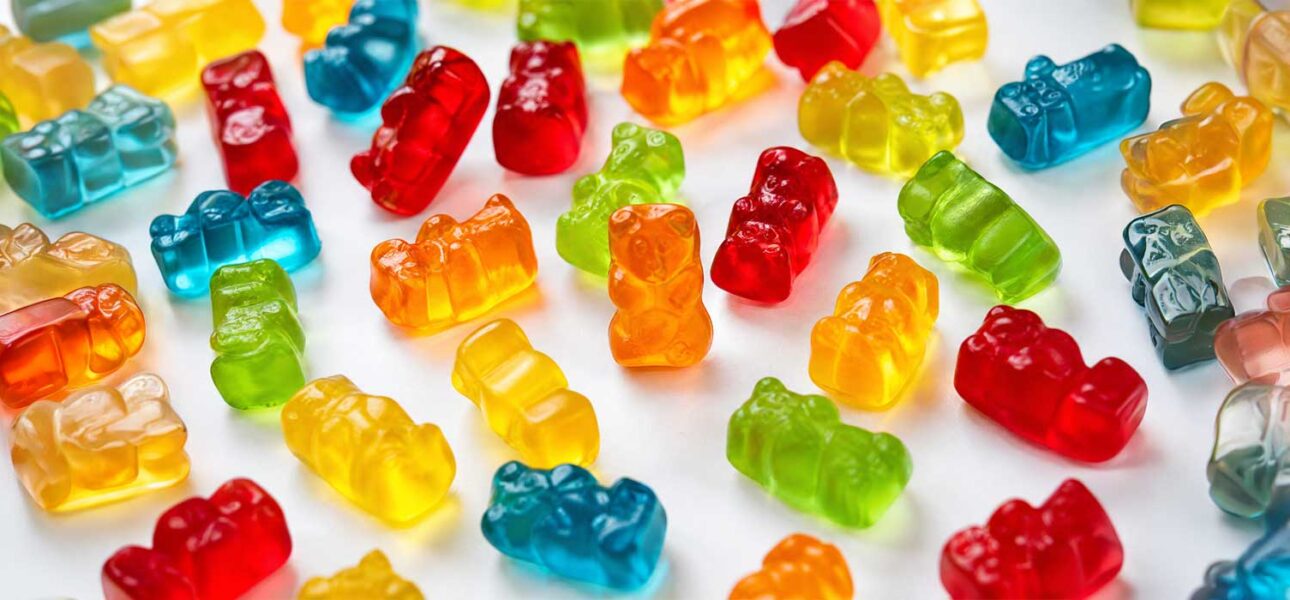
Synthetic FD&C dyes consistently outperform natural alternatives in gummies due to heat stability, pH tolerance across gelatin and pectin bases, and batch-to-batch consistency. Allura Red (Red 40) for red, Tartrazine (Yellow 5) for yellow, Sunset Yellow (Yellow 6) in orange blends, and Brilliant Blue (Blue 1) for blue and green are the industry standards. Always approve colors in your actual gummy matrix — never in water — as the base, pH, and processing temperature all shift shade expression significantly.
The most expensive color mistake in gummy manufacturing happens before a single batch is produced. A manufacturer approves a shade from a liquid dye solution or a supplier’s color card — and discovers weeks into production that the actual gummy looks nothing like what was approved.
Food colors for gummies behave differently than food colors in any other application. The gelatin or pectin matrix, the high sugar concentration, the processing temperature, the pH — all of these interact with your dye in ways that water simply doesn’t reveal. This guide is built on real manufacturing experience, real stability failures, and real regulatory encounters. It will tell you which food colors actually work in gummies, why they work, and what will go wrong if you get it wrong.
The First Mistake Every Gummy Manufacturer Makes
When a gummy manufacturer comes to us asking about food colors, the most common mistake we see is already made: they’ve chosen their color based on how it looks in water.
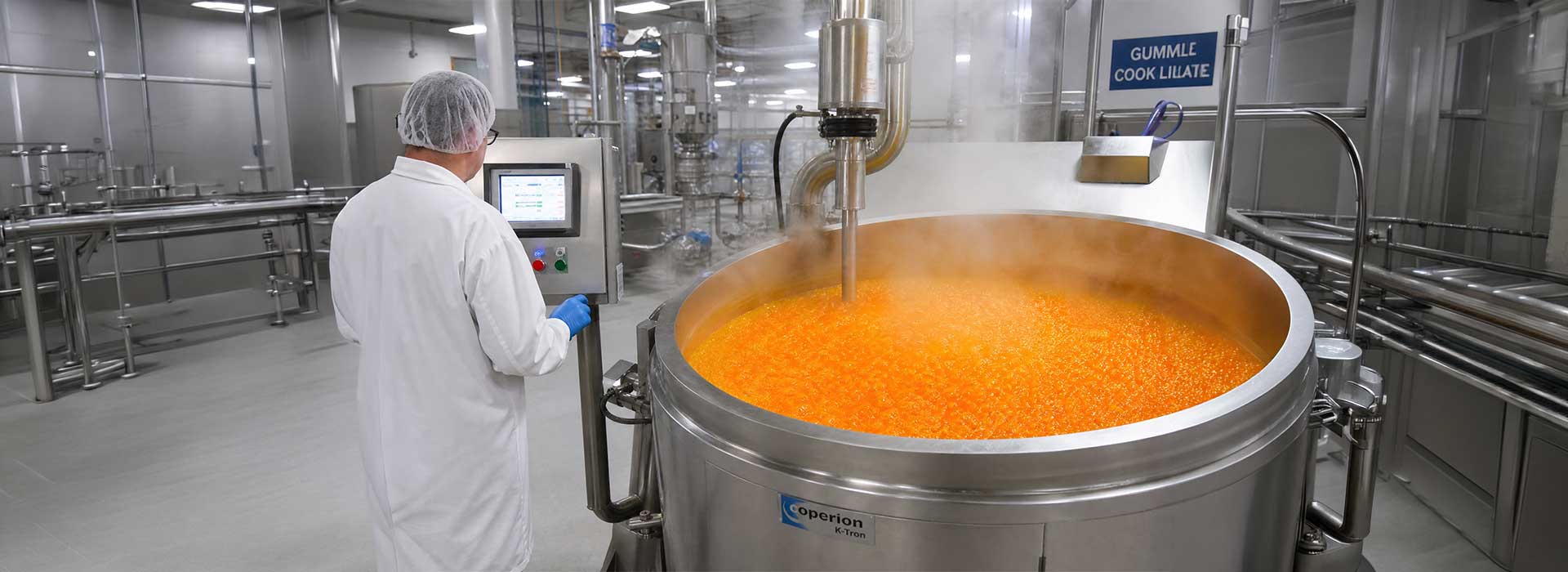
A brilliant blue that looks electric in a dye solution can go slightly green in a high-sugar gelatin base. A strawberry red can pull orange. Gelatin itself has a slight yellow cast that shifts cool-toned colors. The gummy base is not a neutral medium — it’s an active participant in your color chemistry.
FROM THE FACTORY FLOOR
The rule we give every customer without exception: do your color approval in the actual base. Not in water. Not in a competitor’s gummy. In your specific gelatin or pectin formulation, at your target Brix level, after your actual cooking process. That approved standard is the only one that matters.
The variables that shift color in a gummy base are pH, sugar concentration, processing temperature, and the base matrix itself. A change in any one of these — even one that seems unrelated to color, like adjusting citric acid for flavor — can produce a visible shade shift in the finished product.
Synthetic vs Natural Food Colors in Gummies: The Honest Answer
Synthetic food colors win on three fronts that natural alternatives simply cannot match consistently in gummy manufacturing: heat stability, pH stability, and batch-to-batch consistency.
80–110°C
Processing temp range gummy colors must survive
0.05–0.1%
Typical synthetic dye dosage for full gummy color
10–30×
Higher dosage natural colors need to match synthetic vibrancy
Gummy manufacturing is a genuinely harsh environment for color. You’re cooking at 80 to 110°C depending on the base, holding that temperature during depositing, and then the product sits on shelf for 12 to 24 months. Natural colors — anthocyanins, spirulina, beetroot extracts — are not engineered for that.
Anthocyanins are notorious pH shifters. A red at pH 3 becomes purple at pH 4 and blue-grey at pH 5. In a gummy where citric acid levels vary even slightly batch to batch, you can get visible shade inconsistency in the same production run. At the dosage levels required, natural alternatives can also cost 5 to 10× more than synthetics for an inferior result.
MANUFACTURER OPINION
Where natural colors win is clean label positioning and certain regulatory markets. But if the brief is performance, shelf stability, and color consistency across 100,000 unit production runs — synthetic is the honest answer. We say this as a supplier that carries both. The chemistry doesn’t lie.
Best Food Colors for Gummies: Shade by Shade
Here is our manufacturer’s recommendation for each classic gummy color, with the specific synthetic food dyes we recommend and why — based on real formulation experience, not catalog descriptions.
RED
Allura Red
FD&C Red 40 · E129 · CI 16035
The workhorse of gummy reds. Heat stable, pH tolerant, and gives a clean true red without pulling orange or pink at standard dosage. Approved in both US and EU. For markets where Red 40 isn’t available, Carmoisine or Ponceau 4R are the regional alternatives. Erythrosine gives vivid pink-red but has specific regulatory restrictions by market.
DOSE 0.03–0.08% in finished gummy
ORANGE
Sunset Yellow + Allura Red Blend
FD&C Yellow 6 + Red 40 · E110 + E129
No single approved orange dye covers all major markets. The classic approach is blending Sunset Yellow FCF with a small percentage of Allura Red. More red pulls warm and deep; more yellow pushes bright and citrusy. This blend gives you precise control over orange tone that a single dye cannot.
DOSE Blend: 0.04–0.07% total, ~80/20 Yellow/Red ratio
YELLOW
Tartrazine
FD&C Yellow 5 · E102 · CI 19140
Brilliant, heat stable, excellent solubility. The standard for lemon and lemon-lime gummies at low dosage. Sunset Yellow FCF (Yellow 6) gives a deeper amber-orange yellow if you want warmth or a mango tone. For a clean lemon yellow, Tartrazine alone at low dosage is consistently the right call.
DOSE 0.02–0.06% for standard yellow depth
GREEN
Brilliant Blue + Tartrazine Blend
FD&C Blue 1 + Yellow 5 · E133 + E102
No single approved green food dye exists for most global markets. The industry standard is blending Brilliant Blue FCF with Tartrazine. Ratio controls the shade: more blue gives forest or emerald green, more yellow gives lime or apple green. Both dyes are heat stable and behave identically under gummy processing — which is exactly why this pairing is reliable.
DOSE Blend: 0.03–0.08% total, ratio varies by target shade
BLUE
Brilliant Blue FCF
FD&C Blue 1 · E133 · CI 42090
The only practical blue dye for most gummy markets. Remarkably stable in gummy matrices, gives a clean true blue, and doesn’t shift under standard processing conditions. Indigotine (Blue 2) is an alternative but significantly less stable to heat and light — we rarely recommend it as a primary blue for gummies. Brilliant Blue is the call.
DOSE 0.02–0.06% for standard blue depth
PURPLE
Brilliant Blue + Allura Red Blend
FD&C Blue 1 + Red 40 · E133 + E129
Purple is technically a blue-red blend, but it’s the most challenging gummy color to stabilize across different lighting environments. Brilliant Blue and Allura Red respond slightly differently to heat — and the finished shade must be approved under multiple light sources to avoid metamerism issues. See our case study below for exactly why this matters.
DOSE Blend: 0.05–0.10% total, 60/40 Blue/Red as starting point
FROM THE FACTORY FLOOR
A note on blended colors: when you use two dyes in combination, any formulation variable that affects one dye differently than the other will shift your shade. This is the root cause of most gummy color drift in production. Citric acid level, pH, processing temperature, and batch-to-batch dye strength all need to be controlled as part of your color brief — not just as flavor or texture variables.
When a “Minor” Formulation Change Wrecked a Production Run
CASE STUDY
Apple Green Gummies — Shade Drift Across Production Runs
A confectionery manufacturer was producing apple-flavored green gummies using the standard Brilliant Blue and Tartrazine blend. The color was approved at lab scale and looked perfect through the first production run. By the third run, the green had shifted noticeably toward yellow-green — a sickly lime shade that was clearly different from the approved standard.
The investigation traced back to two things happening simultaneously. First, the citric acid dosage had been slightly increased by the flavor team to boost the apple tartness. Nobody flagged it to the color team because it seemed like a minor adjustment. Second, their Brilliant Blue had come from a new batch with slightly lower dye content than the previous lot.
Brilliant Blue is more sensitive to pH shifts than Tartrazine. When the pH dropped slightly from the higher citric acid level, the blue component faded relative to the yellow, pulling the blend toward yellow-green. Combined with the slightly lower dye strength in the new Brilliant Blue batch, the cumulative effect was a visible and commercially unacceptable shade shift.
The fix was straightforward once the root cause was identified: standardize citric acid level in the brief before color is finalized, and require dye content certificates on every Brilliant Blue batch before it enters production.
LESSON
In a blended color system, any formulation change — even one that seems unrelated to color — can shift your shade if it touches pH, temperature, or sugar concentration. We now recommend that any formulation change in a gummy product triggers a mandatory color recheck, not just a flavor or texture review.
Gelatin vs Pectin Gummies: How the Matrix Changes Everything
Gelatin and pectin are fundamentally different matrices and they interact with food colors for gummies in genuinely distinct ways. This is one of the most underappreciated technical differences in gummy manufacturing.
MATRIX 01
Gelatin Gummies
- pH range — 4.5–6.0, relatively neutral
- Base cast — Slight yellow from gelatin proteins
- Process temp — 80–90°C standard
- Color behavior — Forgiving, dye-matrix interaction is low
- Blue/purple — Need slightly higher dosage to overcome base cast
- Natural colors — Possible but challenging
MATRIX 02
Pectin Gummies
- pH range — 3.0–3.8, highly acidic
- Base cast — Clear/neutral but pH is aggressive
- Process temp — Up to 106–110°C for high-Brix
- Color behavior — pH-sensitive, approve at target pH
- Blue/purple — Brilliant Blue can shift at extreme low pH
- Natural colors — Not recommended, fails on pH + heat simultaneously
The vegan gummy market has driven enormous growth in pectin formulations — and with it, a wave of color reformulation challenges that brands didn’t anticipate when they switched base from gelatin to pectin without revisiting their color brief. Switching matrix is not a straightforward substitution. It requires a full color reapproval at the new pH and processing conditions.
FROM THE FACTORY FLOOR
Our standard recommendation for pectin gummies: lean even more heavily toward synthetic food dyes than you might for gelatin, do your color approval specifically at the target pH of the finished product, and build a pH check into your in-process color monitoring. Don’t just check color in the finished product — check it mid-process where you can still intervene.
Regulatory Realities: Food Colors for Gummies by Market
The biggest regulatory misconception isn’t about safety — it’s about assuming approval in one market means approval everywhere. Brands finalize a gummy formulation for the US market using FD&C approved dyes, then want to launch in the EU without realizing they’re essentially starting over on color compliance.
⚠ REGULATORY WARNING
The EU requires a warning label on products containing six specific azo dyes — Tartrazine, Quinoline Yellow, Sunset Yellow, Carmoisine, Allura Red, and Ponceau 4R — stating the product “may have an adverse effect on activity and attention in children.” This is the Southampton study legacy. In practice, many European confectionery brands avoid these dyes entirely rather than carry the label — even though the scientific consensus at standard usage levels is far more nuanced than the warning implies.
| Dye Name | FD&C / E Number | US (FDA) | EU (EFSA) | India (FSSAI) | Note |
|---|---|---|---|---|---|
| Allura Red | Red 40 / E129 | ✓ Approved | ⚠ Warning label | ✓ Approved | EU warning label required |
| Tartrazine | Yellow 5 / E102 | ✓ Approved | ⚠ Warning label | ✓ Approved | EU warning label required |
| Sunset Yellow | Yellow 6 / E110 | ✓ Approved | ⚠ Warning label | ✓ Approved | EU warning label required |
| Brilliant Blue | Blue 1 / E133 | ✓ Approved | ✓ Approved | ✓ Approved | No warning label required |
| Erythrosine | Red 3 / E127 | ✓ Limited use | ✗ Restricted | ✓ Approved | Market-specific — check before use |
| Ponceau 4R | — / E124 | ✗ Not approved | ⚠ Warning label | ✓ Approved | Not permitted in US |
| Carmoisine | — / E122 | ✗ Not approved | ⚠ Warning label | ✓ Approved | Not permitted in US |
MANUFACTURER OPINION
The safety data on approved synthetic food colors at permitted usage levels is genuinely robust. These dyes have been tested more extensively than almost any other food ingredient category. The controversy is largely political and perception-driven, not toxicologically founded at the dosage levels used in gummies. But compliance is real and non-negotiable. Map your target markets before you finalize your color brief — not after.
What Gummy Color Orders Tell Us About the Market Right Now
Tropical & Saturated — Functional Gummies Driving Volume
Vivid mango oranges, electric blue raspberry, bright watermelon reds. Functional gummy brands — vitamins, supplements, sleep aids, immunity products — have learned that bold, vivid color is a purchase signal. It communicates efficacy, potency, and fun simultaneously. When your gummy is sitting next to twelve competitors on a pharmacy shelf, color is doing enormous marketing work. Sunset Yellow and Allura Red blends, Brilliant Blue at higher dosage — these are moving in significant volumes.
Sophisticated Muted Tones — Premium Adult Confectionery
Dusty rose, muted berry, soft peach, sage-adjacent greens. These are coming from premium adult confectionery brands positioning gummies as an elevated treat rather than children’s candy. These shades require more precision blending work — you’re deliberately pulling back from full saturation, which means small dosage errors are proportionally more visible. It’s technically demanding work but commercially exciting.
Sugar-Sanded & Coated Gummies — New Color Complexity
Increased requests for colors that perform well in yogurt-coated and sugar-sanded gummies, where the coating adds another visual layer. The base gummy color needs to read through or complement the coating — which adds an entirely new dimension to the color brief. This is driving demand for deeper base saturation and more careful shade engineering than standard gummies require.
Purple & Lavender — Sleep & Wellness Category
The sleep and relaxation supplement category is creating consistent demand for purple and lavender shades. These are technically the most challenging gummy colors to stabilize across lighting environments — and the functional category’s retail presence across pharmacy, grocery, and online channels means the color must read consistently under very different light sources.
The Hardest Gummy Color Problem We’ve Solved
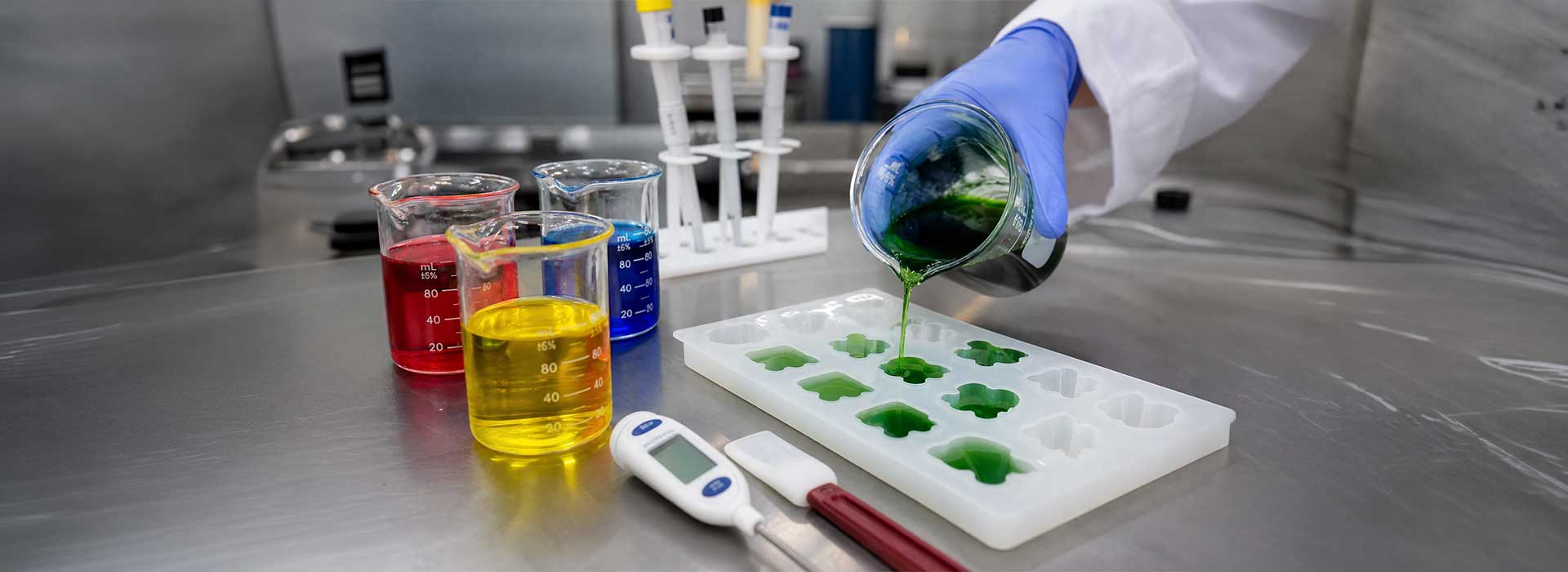
A functional gummy brand came to us needing a deep purple shade for a sleep and relaxation product. Purple sounds simple — blue plus red. But in their gelatin base at target pH and sugar concentration, every blend we initially tested was shifting either too blue under warm retail lighting or too red-pink under cool pharmacy lighting.
The problem was metamerism — the blend looked different under different light sources. Their retail presence spanned both warm-lit pharmacy shelves and cool-lit grocery refrigerators, plus e-commerce product photography under studio lighting.
Purple Gummy — Final Approved Blend (After 6 Iterations)
Brilliant Blue FCF (FD&C Blue 1) — 0.042%
Allura Red AC (FD&C Red 40) — 0.031%
Tartrazine (FD&C Yellow 5) — anchor tone — 0.004%
Total dye loading — 0.077%
The solution was adjusting the Blue-to-Red ratio and introducing a trace amount of Tartrazine to anchor the undertone — then approving the shade under three different light sources simultaneously: D65 daylight, cool white fluorescent, and warm incandescent. We also tightened the dye content specification on incoming raw materials, because at these precision dosage levels, a 2% variance in dye strength was enough to push the shade visibly toward blue or red.
It took six iterations to get a shade that read consistently as purple across all three lighting environments. This is the kind of work that separates a specification-grade synthetic food color supplier from a commodity dye vendor.
What Cheap Food Colors Actually Cost Gummy Brands
The saving on lower-grade synthetic dyes is real but narrow — typically 15 to 20% on the color cost. The color cost itself is 0.5 to 1.5% of total gummy production cost. The actual saving on cheaper dyes is a fraction of a percent of production cost. Here’s what you’re risking for it:
Dye Content Variability
Lower specification dyes have looser dye content tolerances. In a single-dye application, a ±5% variance in dye content is barely visible. In a blended system — like your green, orange, or purple — the same variance in just one component shifts the entire shade. What looks like a color consistency problem is actually a supplier specification problem.
Heavy Metals Contamination
Synthetic food dyes must meet strict limits for lead, arsenic, and mercury. Lower-grade material from suppliers without robust QC programs regularly fails these limits. A batch rejected by a major retailer’s compliance team or by customs means the brand absorbs the entire production run. The math on that event wipes out years of cost savings on dye specification.
The Seasonal Production Disaster
The most damaging scenario we’ve seen firsthand: a brand running a large Halloween seasonal production with lower-specification orange dye. The first 40% of the production run looked perfect. The remaining 60% used a second dye batch from the same supplier with slightly lower dye content. The finished product had two visibly different orange shades in the same retail display. The retailer pulled the entire seasonal line. The cost of that single event — lost sales, logistics of pulling product, brand damage with that retailer — was orders of magnitude larger than the saving on dye specification.
FROM THE FACTORY FLOOR
The color cost in a gummy is not where you save money. It’s where you protect the investment you’ve already made in formulation, packaging, marketing, and retail placement. A specification-grade dye with documented dye content and heavy metals testing is an insurance policy on your entire production run.
Launching Your First Gummy Product: Three Rules That Will Save You
1
Define your color standard in your actual base — before anything else
Not in water. Not in a competitor’s gummy. Not from a Pantone reference. In your specific gelatin or pectin formulation, at your target pH and Brix, after your actual cooking process. That approved standard becomes your production anchor for everything that follows. Every batch is compared to that standard — not to the supplier’s color card.
2
Treat color as a formulation variable that interacts with everything else
pH, citric acid level, flavor compounds, processing temperature — all of these touch color. Build a cross-functional check into your development process so that any formulation change triggers a color recheck automatically. The flavor team adjusting acid level is also adjusting your color. They need to know that before they do it — not after the batch comes out wrong.
3
Map your regulatory markets before you finalize your color palette
The single most expensive color mistake a new gummy brand can make is launching in one market with a color set that cannot be replicated in the next market they want to enter. If the EU is on your three-year roadmap, build an EU-compatible color brief from day one. Retrofitting compliance after launch means visible shade changes that require reapproval from marketing, retail buyers, and regulatory bodies simultaneously.
Frequently Asked Questions
What food colors work best in gummies?
Synthetic FD&C dyes perform best in gummies. Allura Red (FD&C Red 40) for red, Tartrazine (Yellow 5) for yellow, Sunset Yellow (Yellow 6) in orange blends with Allura Red, Brilliant Blue (Blue 1) alone for blue and blended with Tartrazine for green. Purple requires a precision Blue 1 and Red 40 blend approved under multiple light sources. Always approve colors in your actual gummy matrix — not in water.
Can you use natural food colors in gummies?
Natural food colors can be used in gummies but face significant challenges. High processing temperatures (80–110°C), low pH in pectin bases (3–3.8), and long shelf life requirements make most natural colors unstable. Anthocyanins shift shade dramatically with pH changes. Dosage requirements are 10–30× higher than synthetic dyes, and even then the shade is often duller and less consistent batch to batch.
What is the difference between food colors in gelatin vs pectin gummies?
Gelatin gummies have a neutral pH (4.5–6) and a slight yellow cast from the gelatin itself. Pectin gummies require acidic conditions (pH 3–3.8) to gel properly and are processed at higher temperatures — up to 110°C. Color behavior differs significantly. Brilliant Blue can shift at very low pH. Natural colors are essentially not viable in pectin formulations due to the combined pH and heat stress.
Are synthetic food colors safe for gummies?
Yes. FD&C approved synthetic food colors have undergone more extensive safety testing than almost any other food ingredient category. At permitted usage levels — typically 0.03–0.1% in gummies — they are safe and approved by the FDA, EFSA, FSSAI, and other major regulatory bodies. The controversy around synthetic colors is largely perception-driven and not supported by toxicological evidence at standard usage levels.
How do I get a green color in gummies?
No single approved green food dye exists for most global markets. The industry standard is blending Brilliant Blue FCF (FD&C Blue 1) with Tartrazine (FD&C Yellow 5). More blue gives forest or emerald green; more yellow gives lime or apple green. Both dyes are heat stable and behave consistently under gummy processing conditions — which is why this pairing is so reliable.
What food colors are approved for gummies in both the US and EU?
Allura Red (E129), Tartrazine (E102), Sunset Yellow (E110), and Brilliant Blue (E133) are approved in both the US and EU. Note that the EU requires a warning label on products containing Tartrazine, Sunset Yellow, and Allura Red among others. Ponceau 4R and Carmoisine are EU-approved (with warning label) but not permitted in the US. Always map target markets before finalizing your color brief.
Source Food Colors Built for Gummy Performance
Explore our full range of specification-grade synthetic food colors for gummies, confectionery, and functional supplements.
Need formulation support? Request samples or speak with our technical team directly.