Ultramarine Blue
Cosmetic-grade Ultramarine Blue (Cosmetic Grade), Inorganic Pigment supplied in bulk by an experienced manufacturer and distributor for beauty applications.
·
cosmetics color
·
cosmetics color
·
cosmetics color
·
cosmetics color
·
cosmetics color
·
cosmetics color
·
cosmetics color
·
cosmetics color
·
cosmetics color
·
cosmetics color
MANUFACTURER AND EXPORTER, INDIA
Ultramarine Blue (CI 77007) Inorganic Pigment Manufacturer & Exporter
A clean, lightfast medium blue for eye makeup, nail colour and face makeup, in bulk from Advik Colors.
Looking for a dependable Ultramarine Blue manufacturer, supplier or exporter for cosmetics? You are in the right place. Advik Colors manufactures and exports Ultramarine Blue (CI 77007, Pigment Blue 29) for eye makeup, nail, face and personal care brands, contract manufacturers and ingredient distributors worldwide.
As an inorganic pigment it does not dissolve, so it colours by dispersion in oils, waxes and pressed bases, with a clean blue tone, excellent lightfastness and no bleeding of dissolved colour. Packed for sea and air freight, with a Certificate of Analysis and Safety Data Sheet on every order. This page covers the cosmetic grade.
Minimum order
100 kg
Origin
India
Shipping
Sea and air
FCL and LCL
Delivery time
3 to 4 weeks
Depends on destination
Payment
TT or LC
Bank transfer
Product data sheet
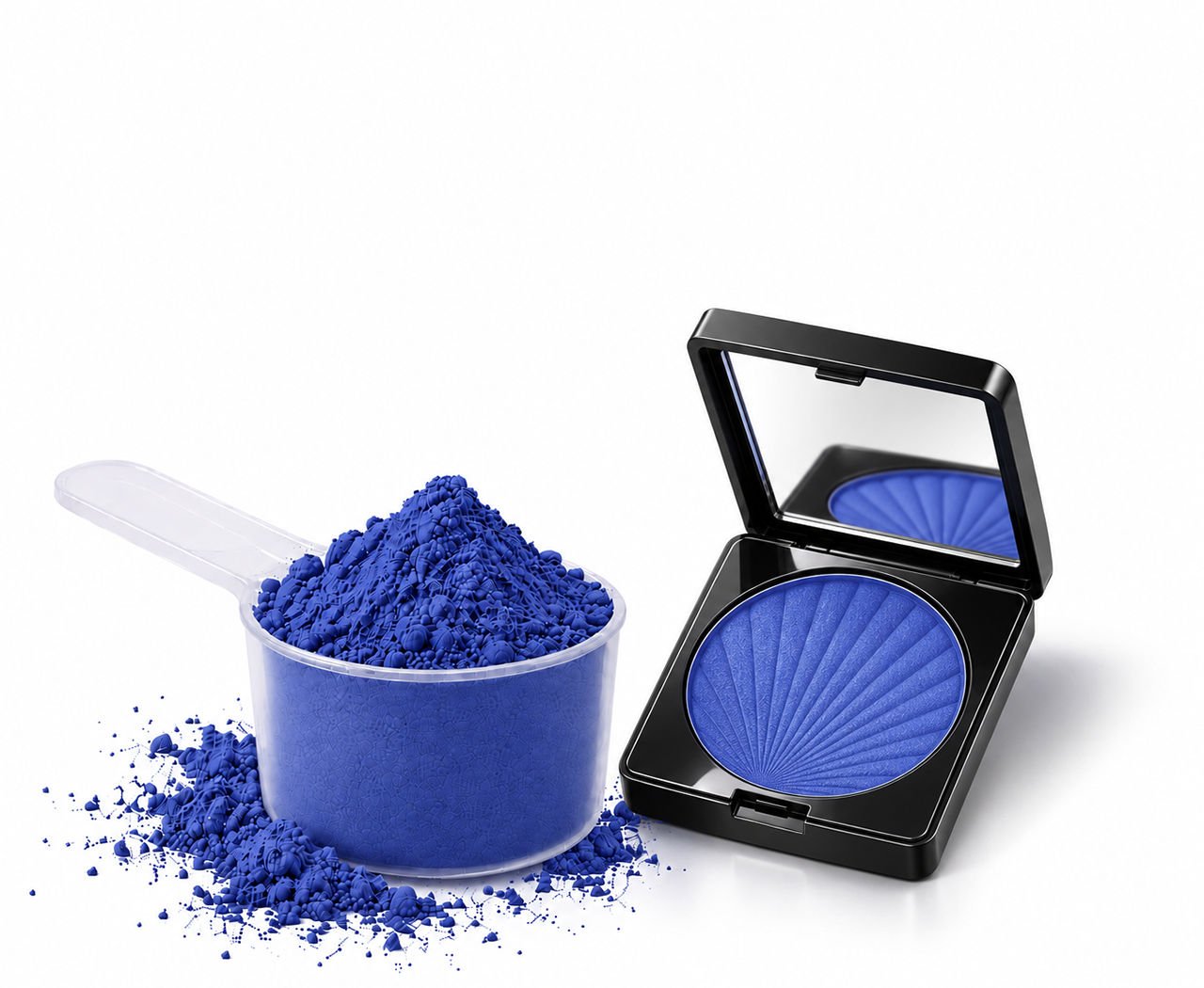
CI 77007
Ultramarine Blue, Pigment Blue 29
3 forms
Powder, liquid dispersion or granules
100 kg
Minimum order quantity
25 kg
Lined HDPE export drums
Specifications, export terms, packing and documents in one place. Save it as a PDF for your purchasing file.
Specifications
● Identity
| Product name | Ultramarine Blue (Cosmetic Grade), Inorganic Pigment |
|---|---|
| Also known as | Pigment Blue 29, Ultramarine, Sodium aluminium sulfosilicate, Lazurite, CI 77007 |
| Cosmetic label name (INCI) | CI 77007Listed as ultramarines in the US. Confirm the wording for your market. |
| C.I. name | Pigment Blue 29 |
| C.I. no. | 77007 |
| HSN / HS code | 32064100Ultramarine and preparations based thereon, heading 3206.41. Verify for your destination. |
| EC no. | 309-928-3Some sources list other EC numbers for the ultramarine family. Confirm on the SDS. |
| CAS no. | 57455-37-5Confirm on the SDS and COA. |
| Molecular formula | About Na6-9Al6Si6O24S2-4Approximate composition. Confirm on the SDS. |
| Molecular weight | Varies (complex silicate)Composition is approximate. See the SDS. |
| Type | Inorganic pigment (sodium aluminium sulfosilicate)Not a dye and not a lake. Grade details are on the SDS and COA. |
● Physical properties
| Shade | Clean medium blueShown here as blue. Undertone (reddish or greenish) depends on grade and dispersion. |
|---|---|
| Appearance | Fine blue powder |
| Odour | Odourless |
| Available forms | PowderLiquid dispersion and granules on request. |
| Particle size | Options on requestAsk for the particle size and grade for your application. |
| Colour strength | MediumLoading sets the depth from pale to deep blue. |
● Solubility
Water
Insoluble
Oils and waxes
Disperses
Solvents
Insoluble
An inorganic pigment colours by dispersion, not by dissolving. Confirm behaviour in your own base.
● Stability and resistance
| pH stability | Stable in neutral to alkaline basesStandard grades break down in acid and can release hydrogen sulfide. Test your base. |
|---|---|
| Quality testing | Tested at multiple stagesShade, dispersion and performance in the formulation. |
| Shade consistency | Consistent from batch to batchControlled production and screening. |
| Dispersion | Disperses readily with wetting into the basePre-disperse in a carrier for the best result. |
| Bleeding and migration | Very lowInsoluble pigment. Test in your own base and pack. |
| Lightfastness | ExcellentTypical of ultramarine pigments. Ratings on request. |
| Heat stability | Stable at normal cosmetic processing temperaturesCheck your own process and ask for the technical data sheet. |
| Technical ratings | On requestAsk for the technical data sheet for your application. |
● Cosmetic compliance
| Permitted use | Externally applied cosmetics incl. eye area (US). Not listed for lipsticks (US)Rules vary by country and product type. |
|---|---|
| Regulatory reference | EU Annex IV entry 120; US 21 CFR 73.2725 (exempt from certification)Confirm for your market. Rules change. |
| Cosmetic specification | On requestAsk for the specification, soluble-salt and heavy-metal limits for cosmetic use. |
● Handling
| Storage condition | Dry, sealed, room temperatureKeep away from moisture and from acids. |
|---|---|
| Handling | Fine dust. Use dust controlAvoid inhaling dust and follow the SDS. |
| Specification limits | Given on the Certificate of Analysis |
| Shelf life | Stated in the product documentationStore as directed in the SDS. |
Values are for general guidance. Batch-specific results are given on the Certificate of Analysis supplied with each order.
Export terms
| Minimum order quantity | 100 kg |
|---|---|
| Country of origin | India |
| Mode of transport | By sea and air |
| Shipping | FCL and LCL |
| Incoterms | FOB and CIF |
| Sea ports | Nhava Sheva and Mundra |
|---|---|
| Airports | Mumbai and Ahmedabad |
| Payment terms | TT (bank transfer) and LC |
| Delivery time | Typically 3 to 4 weeks, depending on destination and shipping mode |
| Logistics packaging | Standard export grade 25 kg HDPE drums with dual LDPE liners for moisture protection |
| Documentation | Invoice, packing list, non-hazardous certificate, Certificate of Analysis (COA) and Material Safety Data Sheet (MSDS) |
HS code classification can vary by destination country. Verify it against your import documentation before shipping.
Packaging
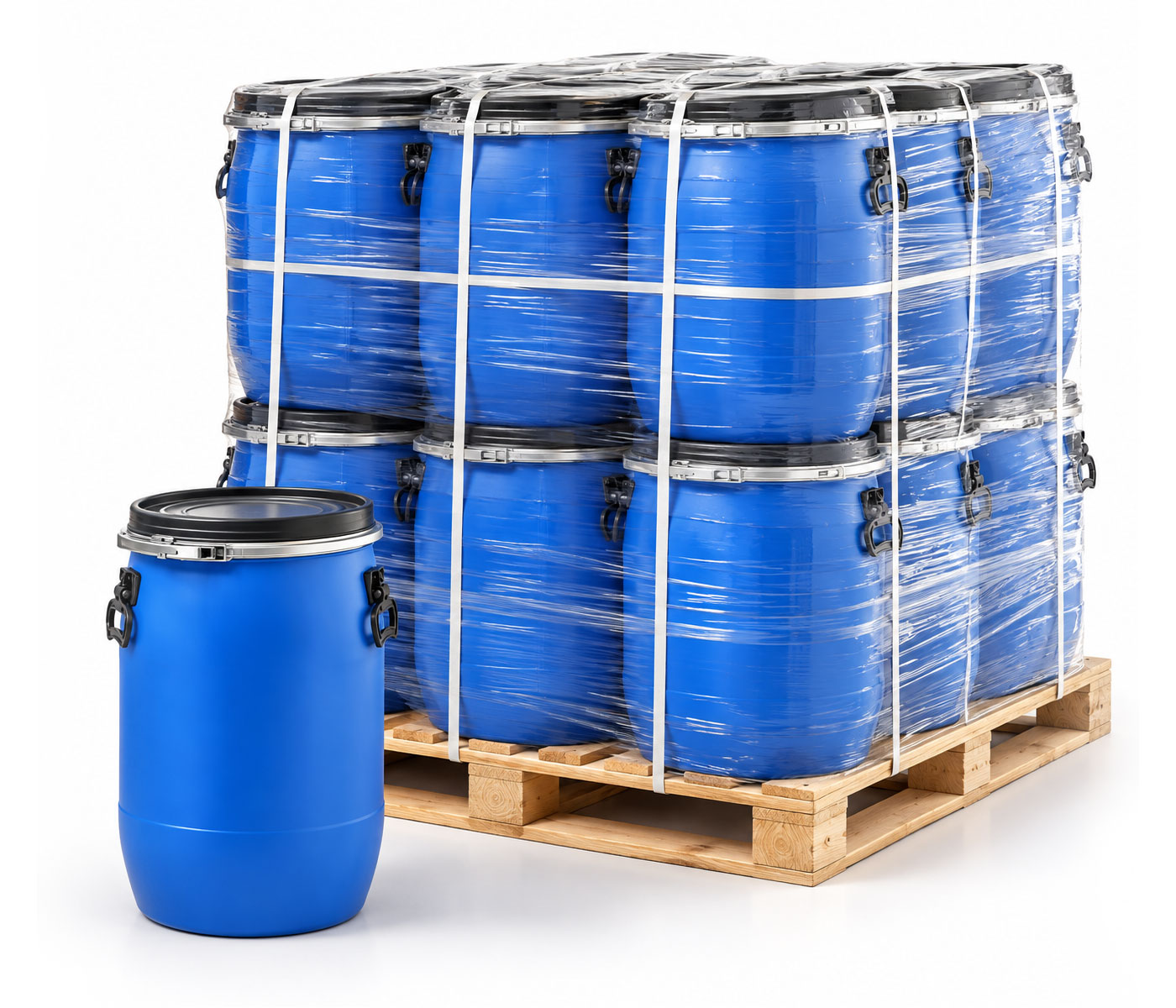
Packed for the voyage
Ultramarine Blue ships in standard export-grade 25 kg HDPE drums. Each drum carries dual LDPE liners to protect the pigment from moisture in transit. Ask us about loading plans for FCL and LCL consignments, and about labels for your market.
- 25 kg drums
- Dual LDPE liners
- Moisture protection
- Sea and air ready
Documents
Certificate of Analysis
Batch results for the lot you buy.
Safety Data Sheet
Handling and storage guidance.
Packing list
Prepared for each consignment.
Commercial invoice
Issued with every shipment.
Non-hazardous certificate
Supplied for export freight.
Documents are supplied as applicable to the product, application and destination. Mention the ones you need in your enquiry.
Lab tool for your technical team
A quick tool built on the terms on this page. It guides planning. Your own trial and the batch COA decide the final shade.
See how colour loading changes the shade
Drag the slider to a loading in per cent of colour by weight. The pan is an illustration, not a shade match. Approve the real shade in your own base.
Loading
1 %
0.5 %
1 %
2 %
3 %
5 %
Batch size (kg of finished base or product)
100
1000 g of Ultramarine Blue (Cosmetic Grade), Inorganic Pigment
At 1 % loading, 100 kg of finished base needs about 1000 g of Ultramarine Blue (Cosmetic Grade), Inorganic Pigment. Approve the loading in your own trial.
Card settings (visible only while you edit; hidden on the live page)
Product colour. Click the coloured box, then open Style → Background → Color and pick any colour. The product (pan) and the slider bar and handle follow it.
Colour name
Ultramarine Blue (Cosmetic Grade), Inorganic Pigment
Slider minimum (%)
0.1
Slider maximum (%)
5
Slider step (%)
0.1
Starting loading (%)
1
Starting batch (kg)
100
Preset buttons (%)
0.5, 1, 2, 3, 5
Type numbers only. The slider, the preset buttons and the result on the live page follow these values. Preset buttons: separate numbers with commas (the card has five buttons; extra ones stay hidden).
Result wording (use {amount} in grams, {product}, {loading}, {batch})
Result title
{amount} g of {product}
Result text
At {loading} % loading, {batch} kg of finished base needs about {amount} g of {product}. Approve the loading in your own trial.
Message when the batch is empty (title)
Enter a batch size
Message when the batch is empty (text)
Enter the batch size in kilograms to see the grams of {product} needed.
OVERVIEW
Ultramarine Blue (CI 77007): Lightfast Blue Cosmetic Pigment for Eye Makeup, Nail Colour & Face Makeup
At Advik Colors, we manufacture Ultramarine Blue for cosmetic and personal care brands that need a clean, dependable blue.
Ultramarine Blue (CI 77007, Pigment Blue 29) is an inorganic pigment, a sodium aluminium sulfosilicate made by calcining kaolin, sulfur, sodium carbonate and other raw materials. It is not a dye and not a lake. It does not dissolve, so it colours by dispersion into oils, waxes and pressed bases, giving a clean medium blue with excellent lightfastness and no bleeding or migration. We make it under controlled processing for consistent particle size, strength and batch-to-batch shade, and check each batch internally for shade, dispersion and performance in the formulation.
Whether you are a cosmetic brand, a contract manufacturer, a private-label house, a distributor or an importer, Advik Colors provides a dependable supply backed by quality control and export-ready documentation. It suits eyeshadows, eyeliners, mascaras, face makeup, nail polishes, masks, soaps and bath products. Lighter blues are made by adding titanium dioxide. Standard grades do not tolerate acid, so check the pH of your base.
With a focus on quality, compliance and long-term partnerships, we support global B2B customers seeking a manufacturer-backed source of cosmetic colour. This page covers the cosmetic grade. Rules on where it may be used differ by country, and in the US it is not listed for lip products, so ask us for the specification and documents for your market. Food, pharma and other uses need their own grade and documents. We prepare export paperwork with each shipment. Ask for the form you need on WhatsApp.
Available forms
Standard powder
General-purpose lake grade
Higher dye-content grade
For deeper shades at lower use
Fine particle size
For smooth coatings and suspensions
Formulation note: approve before scaling
Ultramarine Blue is a fine pigment that disperses readily. Wet or pre-disperse it into your base (an oil, wax or carrier) with moderate shear for an even, speck-free colour. Handle it with dust control. It is stable in neutral and alkaline bases, but standard grades break down in acid and can fade and release hydrogen sulfide, so check the pH of your base. Shade can vary with your base, process and loading, and a pale base will lift the blue.
Pro tip
Approve a sample in your own base with a drawdown before scaling up, and keep the batch COA with your approved sample. For lighter blues, tint with titanium dioxide.
On the label
In the US the colour is declared as ultramarines, and the EU uses the CI number, here CI 77007. Confirm the exact label wording against the rules in your market and the batch COA.
Check your market first
In the US, ultramarines (21 CFR 73.2725) are exempt from certification and listed for externally applied cosmetics including the eye area, but not for lipsticks. In the EU, CI 77007 is listed in Annex IV. Rules differ by country and product type and change over time, so confirm your destination before ordering. We share the documents we hold on request.
Applications
Where our customers use Ultramarine Blue. Results depend on process and the rest of your formulation.
Eyeshadows and eye makeup
- Pressed and loose eyeshadows
- Blue, navy, denim and periwinkle shades
- Cream and stick eye colours
A clean medium blue for eye colour, and listed for the eye area in the US. Confirm the rules for your destination.
Eyeliners, mascaras and brows
- Pencil, gel and liquid eyeliners in blue
- Blue and navy mascaras
- Coloured lash and brow accents
Easy to disperse. Approve the shade in your own base, because a pale base will lift the blue.
Nail care
- Nail polishes and gel polishes
- Blue and indigo lacquers
- Nail art and stamping colours
A pigment does not dissolve, so it needs even dispersion. Test for specks and stability in your nail base.
Face makeup and pressed powders
- Blushers and cheek colour blends
- Colour-correcting and toning tints
- Pressed powders and highlighter blends
A small amount of blue is used to tone and shade blends. Check loose-powder formats for dust control and your market rules.
Skin care and masks
- Tinted creams and gels
- Blue clay and cleansing masks
- Rinse-off and leave-on bases
Check the pH of your base first, because standard ultramarine does not tolerate acid. Test dispersion and staining.
Body and face paints
- Professional and theatrical makeup
- Body and face art palettes
- Seasonal and costume colours
Approve the shade and the removal on skin in your own base. Check the colour rules for your market.
Soap, bath and personal care
- Blue soaps and cleansing bars
- Bath bombs, bath salts and shower gels
- Shampoos and body washes (non-acidic bases)
It is generally stable in alkaline bases such as soap. Run a stability and stain test in your base, and avoid acidic formulas.
Quality and why buyers choose Advik Colors
Request the documents you need from the data sheet above.
- FSSAI
- ISO 9001 & ISO 22000
- GMP
- HALAL
- KOSHER
- FDA-registered
- APEDA
- Chemexcil
Our colour production facility is certified by ISO, FDA, GMP, HALAL and KOSHER to meet international safety standards for food, cosmetic and pharma exports. APEDA and Chemexcil registrations are listed above.
In-house manufacturing
Made in our own plant with strict quality control.
Consistent shade and strength
We work to keep every batch matched to your approved sample.
Export-oriented packaging and documentation
Lined drums and a complete document set.
Bulk availability
Reliable supply for wholesalers and distributors.
Application support
Support for different cosmetic bases, dispersion methods and processes.
Trusted by global importers
Repeat importers rely on us for long-term supply and steady reorders.
·
Find your answer
·
Find your answer
·
Find your answer
·
Find your answer
·
Find your answer
·
Find your answer
·
Find your answer
·
Find your answer
·
Find your answer
·
Find your answer
Read the most frequent questions about Ultramarine Blue
What type of products is Ultramarine Blue best suited for?
Ultramarine Blue (CI 77007, Pigment Blue 29) is best suited to externally applied cosmetic and personal care products that need a clean blue by dispersion: eyeshadows, eyeliners, mascaras, face makeup, nail products, masks, soaps and bath products, subject to local regulations. This page covers the cosmetic grade.
Why is Ultramarine Blue called an inorganic pigment?
Ultramarine Blue is a sodium aluminium sulfosilicate, made by calcining kaolin, sulfur, sodium carbonate and other raw materials. It is an inorganic pigment: it does not dissolve and colours by dispersion. It is not a dye and not a lake, so there is no dye or aluminium substrate. Grade details are on the Safety Data Sheet and Certificate of Analysis, which we share on request.
What are the HSN code, CAS number and CI number?
HSN 32064100, CI 77007 (Pigment Blue 29) and CAS 57455-37-5. Some SDSs give EC 309-928-3, and CosIng lists other CAS numbers for the ultramarine family. HS classification can vary by destination country, so verify it against your import documentation.
Is this grade suitable for food, pharma or other uses?
This page covers the cosmetic grade. Other uses have their own purity specifications and rules. For food, pharma or other uses, tell us your application and destination and we will advise the grade and documents that match.
How does it differ from dyes and lakes?
A dye dissolves. A lake is a dye fixed onto an insoluble substrate. Ultramarine Blue is an inorganic pigment that is insoluble from the start. It colours by dispersion, with excellent lightfastness and no bleeding of dissolved colour.
Can I use Ultramarine Blue in cosmetics sold in the US?
In the US ultramarines are listed under 21 CFR 73.2725 and are exempt from certification. FDA's cosmetic colour table marks them as permitted for the eye area and for external use, but not for cosmetics generally including lipsticks. Tell us your destination and we will share the documents we hold.
Can I use it in the EU?
CI 77007 is listed in Annex IV of Regulation (EC) No 1223/2009, entry 120. Ask us for the COA and specification, and check the rules for your product type.
Is it suitable for eyeshadows and eye makeup?
Yes. It gives a clean medium blue for eyeshadows, liners and mascaras, and it is listed for the eye area in the US. Confirm the rules for your destination and product type.
Can it be used in lipsticks?
Not for the US market, where FDA does not list ultramarines for lipsticks or lip products. Rules in other countries differ, so check your market before developing a lip product.
Is it stable in acidic formulas?
No. Standard ultramarine is sensitive to acid. In an acidic base it can break down, lose its colour and release hydrogen sulfide, while it is generally stable in alkaline bases such as soap. Check the pH of your base, test before committing, and ask us about acid-resistant grades.
Can I make lighter blues with it?
Yes. Tint it with titanium dioxide for light and pastel blues, or raise the loading for deeper blues. It is a medium-strength pigment, so run a drawdown and approve the final shade in your own base.
Are different blue undertones available?
Ultramarine blue grades can have a reddish or a greenish undertone. Tell us the shade you need and we will suggest the grade to trial, and approve it in your own base.
Is it suitable for private label?
Yes. Its repeatable particle size and strength across batches make it suitable for private-label programmes. Keep an approved sample and compare it against each reorder.
How easy is it to work with during processing?
It disperses readily with wetting or pre-dispersion into your base, often in a carrier such as oil. Good dispersion gives an even colour and avoids specks. Use dust control and run a trial in your own base.
Is it light and heat stable?
Lightfastness and heat stability are excellent, as is typical of ultramarine pigments, and it is stable at normal cosmetic processing temperatures. Check your own process in a trial and ask for the technical data sheet.
What level of quality control is applied?
Each batch is checked internally for shade, dispersion and performance in the formulation. Supporting documents such as a Certificate of Analysis and Safety Data Sheet are available for verification.
Who typically sources Ultramarine Blue from you?
Our customers include cosmetic brands, contract and private-label manufacturers, personal care makers, ingredient traders, distributors and exporters looking for consistent, manufacturer-direct supply.
What is the minimum order quantity?
The minimum order is 100 kg. Smaller sample quantities can be arranged so you can test before ordering.
Which forms do you supply?
We supply it as a powder. A liquid dispersion or granules can be discussed on request, and are often easier to handle because they reduce dust. Tell us your process and we will suggest the form to trial.
How is it packed and shipped?
It ships in 25 kg HDPE drums with two inner liners, by sea (FCL or LCL) or by air. Sea shipments leave from Nhava Sheva or Mundra, and air shipments from Mumbai or Ahmedabad.
Which Incoterms and payment terms do you offer?
We quote FOB and CIF. Payment is by TT (bank transfer) or letter of credit.
How long does delivery take?
Delivery typically takes 3 to 4 weeks. Confirm the schedule for your quantity when you place the order.
Can I use Ultramarine Blue in my country?
The exact rules depend on the country, the cosmetic product type and the area of use, and they change over time. For example, the US lists ultramarines under 21 CFR 73.2725 as exempt from certification but not for lipsticks, and the EU lists CI 77007 in Annex IV. Check with your local authority or regulatory adviser, and tell us your destination so we can share the documents we hold.
Global markets we serve
Search for your country. Shipping to a country does not mean the colour is permitted there, so check local rules.
Europe and Eurasia
- Denmark
- Finland
- France
- Germany
- Greece
- Italy
- Netherlands
- North Macedonia
- Poland
- Portugal
- Spain
- Sweden
- Switzerland
- United Kingdom
- Turkey
- Russia
- Kazakhstan
- Uzbekistan
Asia-Pacific
- Australia
- Cambodia
- China
- Indonesia
- Japan
- Malaysia
- Myanmar
- Philippines
- Singapore
- South Korea
- Taiwan
- Thailand
- Vietnam
Middle East and Africa
- United Arab Emirates
- Lebanon
- Yemen
- Egypt
- Morocco
- Nigeria
- Ghana
- Kenya
- Tanzania
- Uganda
- Ethiopia
- South Africa
- Namibia
- Malawi
- Lesotho
- Benin
- Togo
- Cameroon
- Gabon
- Burundi
- Sierra Leone
- South Sudan
- Saudi Arabia
Americas
- United States
- Canada
- Mexico
- Central America
- Guatemala
- Costa Rica
- Argentina
- Bolivia
- Brazil
- Chile
- Colombia
- Ecuador
- Paraguay
- Peru
- Venezuela
Enquire About This Product
Articles & insights
·
Articles & insights
·
Articles & insights
·
Articles & insights
·
Articles & insights
·
Articles & insights
·
Articles & insights
·
Articles & insights
·
Articles & insights
·
Articles & insights
·
Insights, Trends & Colour Know-How